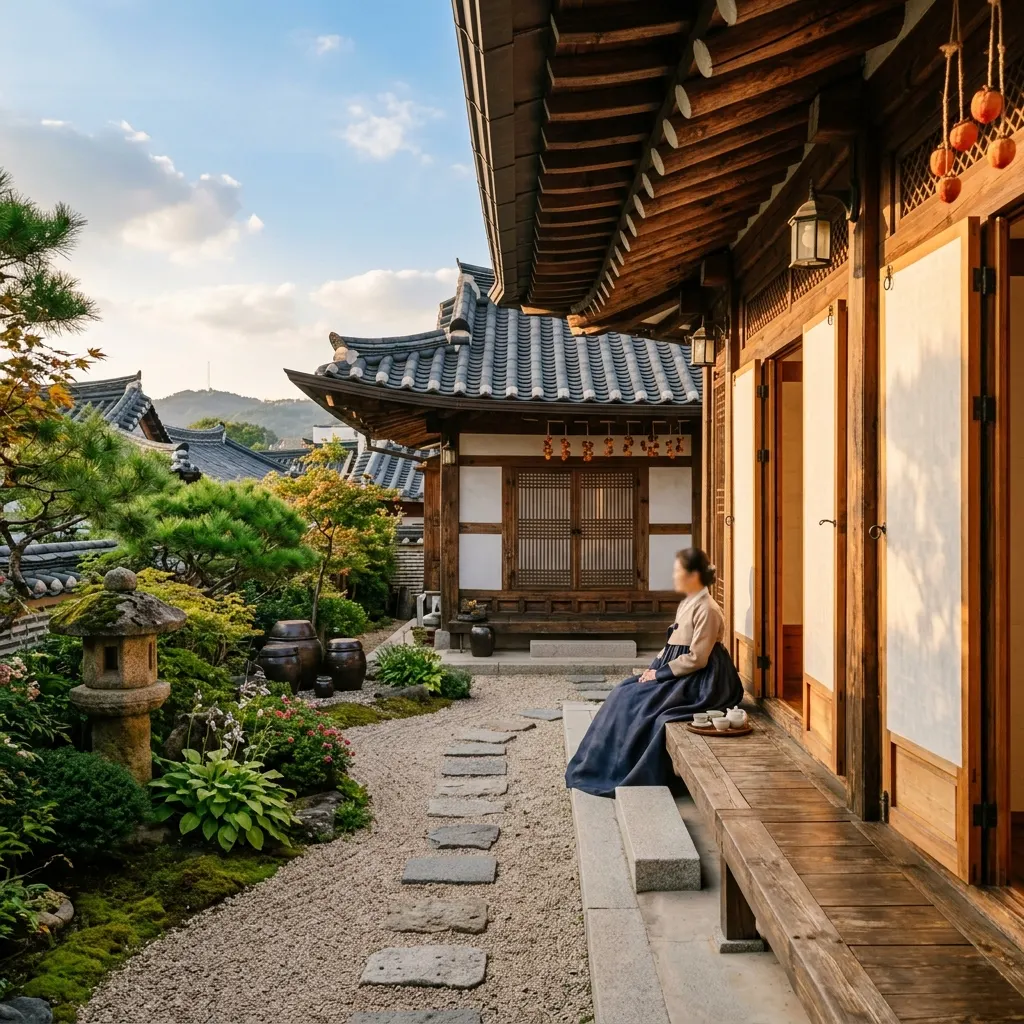
There is a specific kind of silence that only exists in the winding alleys of Bukchon. While the rest of Seoul vibrates with the energy of neon lights and skyscrapers, this neighborhood feels like a held breath. Stepping into hanok guesthouses bukchon isn’t just about finding a place to sleep. It is a deliberate choice to slow down. Positioned strategically between the grandeur of Gyeongbokgung and Changdeokgung palaces, Bukchon has served as the residence for Seoul’s nobility for over six hundred years, and today, it offers a rare bridge to the Joseon Dynasty’s architectural wisdom.
Choosing the right traditional stay can be overwhelming. The options range from rustic, minimalist heritage homes to high-end boutique villas that rival five-star hotels. This guide breaks down the nuances of these properties, helping you navigate the booking process and ensuring your stay is as culturally enriching as it is comfortable.
📊 Guide Directory (Index)
The Soul of Bukchon Architecture
To appreciate a hanok, one must first understand that these buildings were designed to coexist with nature, not conquer it. A traditional Korean house is a living organism. The use of natural materials—pine wood for the skeleton, clay for the walls, and hanji (mulberry paper) for the windows—allows the house to “breathe.” This organic construction regulates humidity and temperature far more naturally than concrete ever could.
The focal point of any authentic Bukchon stay is the madang, or central courtyard. This open space is not merely for aesthetics. It serves as a light well, pulling sunshine into the inner rooms, and acts as a thermal buffer that circulates air during the humid Korean summers. When you stay in a hanok, you aren’t just renting a room; you are inhabiting a philosophy of balance. While modern renovations have introduced essential luxuries like high-speed Wi-Fi and climate control, the core structural integrity of these homes remains a testament to Joseon-era engineering.
The Appeal of the Hanok Experience
What separates a traditional guesthouse from a standard hotel is the sensory engagement. It is the scent of aged wood and the sound of rain tapping on a tiled roof. For many, it is the most memorable part of their Seoul itinerary.
🔥 The Magic of Ondol
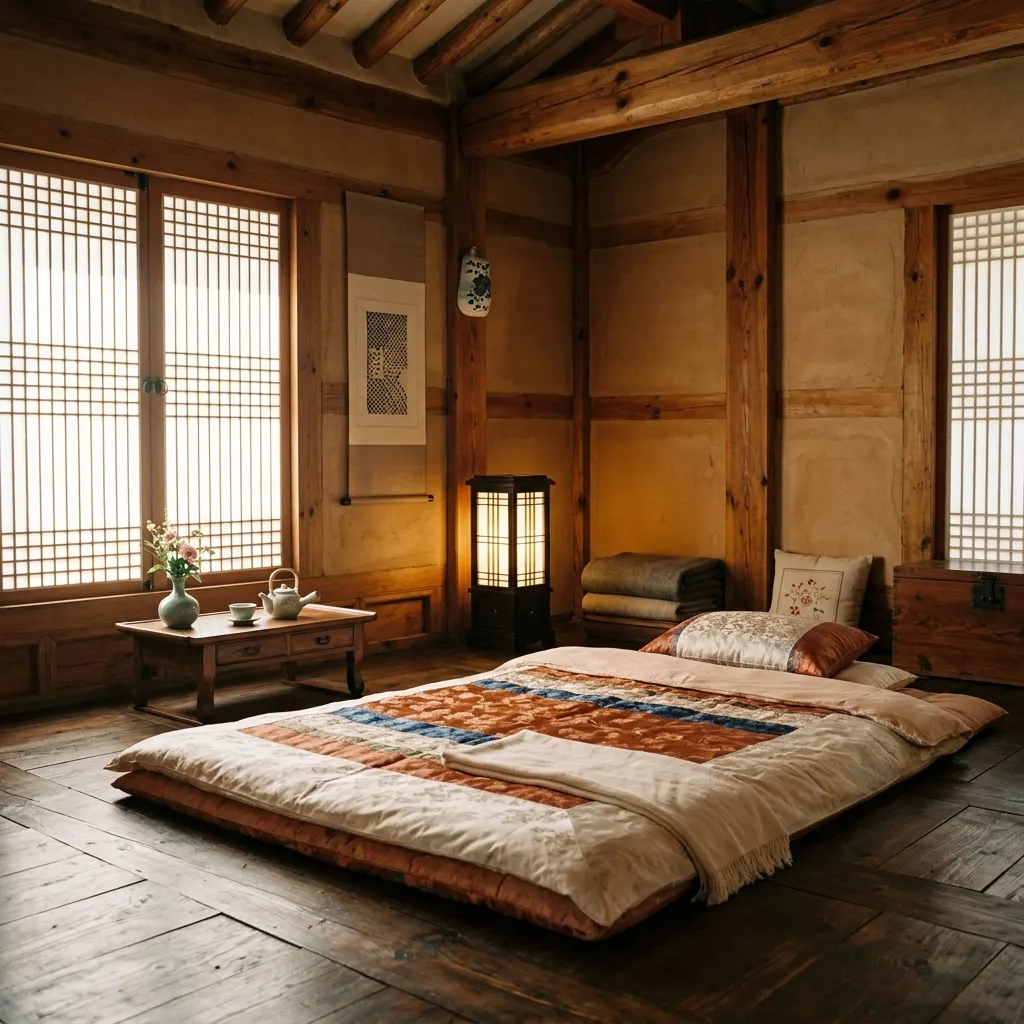
Forget central heating. Ondol is a traditional underfloor heating system that radiates a deep, penetrating warmth. In the winter, there is nothing more comforting than resting on a warm floor, which many guests find helps alleviate jet lag and muscle tension.
🍱 Authentic Bansang Breakfast
Morning rituals in Bukchon often include a traditional bansang. This isn’t just breakfast; it’s a curated spread of small dishes, steamed rice, and seasonal soups. It provides a quiet, nourishing start to the day before the city wakes up.
🚶 Exclusive Early Access
Bukchon can become crowded by 10 AM. By staying overnight, you gain the luxury of the “blue hour.” Walking the cobblestone slopes at 6 AM, when the only sound is the distant chime of a temple bell, is an experience money cannot buy elsewhere.
Comparing the Top 5 Traditional Stays
Not all hanoks are created equal. Some focus on strict historical preservation, while others are “fusion” properties that prioritize Western comforts. To help you decide, we have analyzed the most reputable options in Bukchon based on their architectural style, price points, and capacity.
| Accommodation Name | Heritage Style | Average Rate | Main Amenity | Best For |
|---|---|---|---|---|
| Bukchon Maru Hanok | Traditional Wood & Hanji | USD 120 – 150 | Organic home-cooked breakfast | Families seeking local hospitality |
| Rakkojae Seoul House | Luxury Premium Cultural Center | USD 250 – 400 | Hinoki bath & tea ceremony | Couples seeking premium luxury stay |
| Gongsimga Guesthouse | Historic Scholar House | USD 80 – 110 | Calligraphy class & games | Budget-conscious solo travelers |
| Bonum 1957 Boutique | Modern Boutique Fusion | USD 180 – 230 | Private terrace & cocktail bar | Travelers wanting hotel comforts |
| Chiwoonjung Stay | VIP Royal Residence | USD 350 – 550 | Fine dining dinner & garden | VIPs looking for complete privacy |
Finding Your Ideal Hanok Match
Choosing the wrong style of hanok can lead to a frustrating stay—especially if you aren’t used to floor-sleeping or shared facilities. Use these questions to narrow your search.
📝 Hanok Compatibility Check
[Yes / No]
[Yes / No]
[Yes / No]
[Yes / No]
If you answered Yes to Questions 1, 2, and 3, your best bet is a Boutique Fusion Hanok. Properties like Bonum 1957 offer raised beds and modern plumbing while maintaining a traditional exterior. However, if you answered Yes to Question 4 and No to the others, you will find the most satisfaction in a Heritage Guesthouse like Rakkojae, where the experience is rooted in authentic, old-world simplicity.
Availability Trends & Cost Analysis
Demand for Bukchon stays is volatile. Because these are heritage sites, they cannot simply “add more rooms” to meet demand. Booking windows are tight, and prices fluctuate heavily based on the season—particularly during the spring cherry blossoms and autumn foliage peaks.
The Strategic Booker (3+ Months Out)
- Availability: High (~95%). You have the pick of the litter.
- Room Choice: Access to the most coveted garden-view suites and corner rooms.
- Pricing: Ability to secure early-bird rates and avoid “last-minute” surge pricing.
The Spontaneous Traveler (1 Month Out)
- Availability: Moderate to Low (~40%).
- Room Choice: Often limited to smaller, internal rooms or those without garden access.
- Pricing: Standard seasonal rates; high risk of sell-outs during weekends.
Living Traditionally: Guest Etiquette
A hanok is not a sterile hotel room; it is a delicate architectural asset. Because the walls are primarily wood and paper, the “acoustic privacy” is very different from a concrete building. Respecting the space is key to a harmonious stay.
First, the rule of the maru (wooden porch) is absolute. Footwear must be removed before stepping onto the wooden floors. This isn’t just for cleanliness; it protects the soft, aged wood from scratches and moisture. Second, be mindful of your volume. Sounds travel easily through hanji walls. After 9 PM, Bukchon reverts to a quiet residential village. Speaking in hushed tones is a courtesy to both your fellow guests and the local residents who still call these alleys home. Finally, avoid eating pungent or staining foods in the sleeping quarters. Use the designated dining areas or courtyards to ensure the traditional flooring remains pristine for future generations.
Securing Your Reservation: A Step-by-Step
Avoid third-party sites that lack local verification. To ensure you are booking a certified heritage stay, follow this professional workflow.
Start at the Seoul Hanok Portal (https://hanok.seoul.go.kr). This is the gold standard for identifying government-certified heritage homes.
Use Naver Map (https://map.naver.com) instead of Google Maps. Naver is far more accurate for the narrow, winding alleys of Bukchon and will give you a better sense of the walk from Anguk Station.
Verify the bedding. Some rooms offer a “yo” (traditional floor mattress) while others provide Western beds. This detail is often hidden in the fine print.
Complete your payment via a secure portal. If booking directly through a guesthouse website, ensure they use a recognized payment gateway.
Coordinate your arrival. Many hanoks are small family-run operations without a 24-hour front desk. Notifying your host of your arrival time is essential for a smooth key handover.
Common Traveler Questions
First-time hanok guests often have the same concerns. Here is the reality of staying in a traditional Korean home.
Q: Is sleeping on the floor actually comfortable for Westerners?
A: It is a different kind of comfort. The yo mattresses in premium guesthouses are surprisingly dense and provide strong lumbar support. When paired with the warmth of the ondol floor, many guests find it more relaxing than a spring mattress. However, if you have acute back issues, we strongly suggest a fusion hanok with a raised bed.
Q: Should I expect a private bathroom in every room?
A: Not always. High-end properties like Rakkojae have integrated modern en-suite bathrooms into every room. Budget-friendly or ultra-traditional heritage stays may still use shared bathrooms to keep the original floor plan. Always check the “Room Facilities” section before you pay.
Q: Can I store my luggage there if I arrive before check-in?
A: Almost certainly. Most Bukchon hosts are very accommodating with luggage. This is a huge advantage, as the steep, cobblestone paths of the village are not friendly to heavy suitcases. Drop your bags early and explore the village unencumbered.
Final Thoughts on Your Bukchon Stay
Selecting a stay among the many hanok guesthouses bukchon is about more than just a room; it’s about choosing how you want to experience Seoul. By stepping away from the anonymity of a hotel and into the intimacy of a traditional home, you gain a deeper understanding of Korean culture—one rooted in respect for nature and ancestral legacy.
Because these properties are limited and highly sought after, the secret to a successful trip is early preparation. Whether you seek the meditative silence of a heritage house or the refined luxury of a boutique villa, Bukchon offers a sanctuary that remains timeless amidst the chaos of a modern metropolis. Prepare your itinerary, book your stay, and get ready to wake up to the quiet beauty of a traditional Korean morning.
TRAVEL WRITER
✓ Verified
Updated 2026.05