Navigating Seoul on Two Wheels: A Practical Guide to Ttareungyi
Trade the crowded subway for the breeze of the Han River. Here is everything you need to know about using Seoul’s public bike system as a visitor.
Seoul is a city of contrasts. One moment you are staring at a glass skyscraper in Gangnam, and the next, you are wandering through a silent Joseon-era palace. While the subway system is legendary for its efficiency, it keeps you underground. To truly feel the pulse of the city, you need to be above street level. This is where Ttareungyi (따릉이) comes in. Named after the rhythmic sound of a bicycle bell, this public bike-share system has transformed how residents and tourists move through the metropolis. It is an affordable, sustainable way to bridge the gap between transit stops and hidden gems that taxis often overlook.
Budget-Friendly
Rides start around 1,000 KRW. It is arguably the cheapest way to see the city’s riverfronts without committing to a private rental.
Massive Network
With over 2,700 stations, you are rarely more than a five-minute walk from a bike. The coverage spans almost every major district.
Visitor Accessible
The 2026 updates have streamlined English support. Foreign credit cards are now accepted without the need for a local phone number.
Understanding the Ttareungyi System
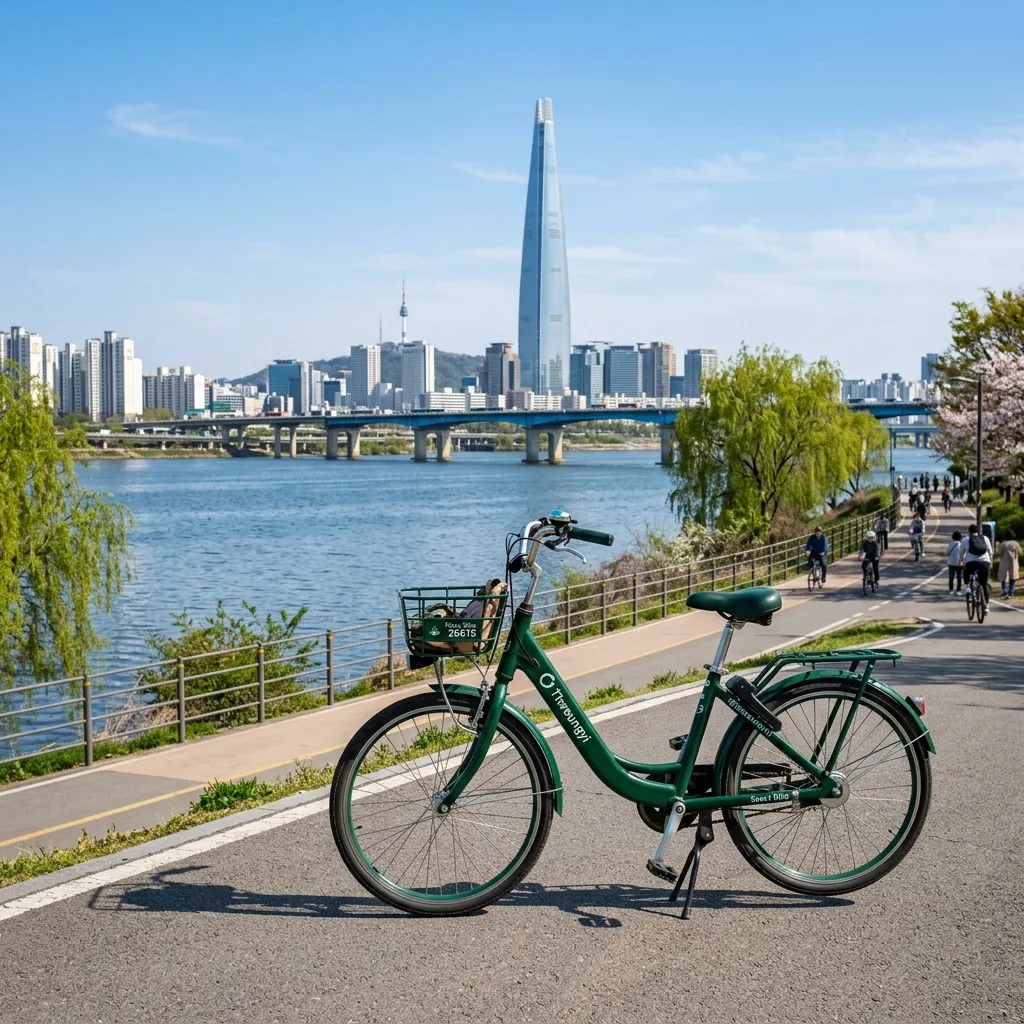
The Seoul Metropolitan Government launched Ttareungyi not just as a convenience, but as a push toward a greener urban environment. These distinctive white-and-green bikes are built for durability. Each unit comes equipped with a front basket for your bag, integrated lights for evening rides, and a robust smart lock that handles the entire transaction.
The system has evolved significantly. In earlier years, foreign visitors struggled with “real-name authentication”—a common Korean digital hurdle requiring a local ID or SIM card. By 2026, this barrier has largely vanished for the visitor’s portal. You can now move from “downloading the app” to “pedaling down the street” in under five minutes. These bikes aren’t designed for mountain trekking or high-speed racing; they are casual cruisers meant for the flat paths of the river and the gentle slopes of the city’s residential neighborhoods.
How to Get Riding: A Step-by-Step Walkthrough
Depending on your stay, you can choose between a quick visitor pass or a more permanent membership. Most tourists will find the non-member visitor route the most efficient. It requires no long-term commitment and works instantly.
App Setup and Language Selection
Search for “Seoul Bike” in the App Store or Google Play. Once installed, head straight to the settings menu to switch the language to English. If you prefer not to install an app, the mobile web version is surprisingly capable and offers almost identical functionality for scanning and payment.
Selecting Your Ride Duration
Navigate to the **”Purchase Voucher”** section. You will see options for a **1-Hour Pass** or a **2-Hour Pass**. This is a common point of confusion: these are not “total daily limits.” Instead, they are the maximum time you can keep a single bike before it must be returned to a dock. You can rent, return, and rent again as many times as you like within the 24-hour window of your voucher.
Payment and Verification
Enter your payment details. The system now accepts major international cards including Visa, Mastercard, and JCB. If your card is declined, check if your bank requires an “International Transaction” toggle to be active. Once the payment clears, your digital voucher is active immediately.
Scanning and Unlocking
Find a bike at any station. Use the app’s scanner to read the QR code located directly under the seat. You will hear a distinct “click” and a voice announcement confirming the unlock. Give the bike a quick check—ensure the tires are inflated and the brakes are responsive—before you head out.
Fare Breakdown for 2026
Ttareungyi remains one of the most affordable transit options globally. The cost is negligible compared to the freedom it provides.
| Voucher Type | Time Limit Per Ride | Price (KRW) | Overtime Fee (Every 5 Mins) |
|---|---|---|---|
| 1-Day Pass (1 Hour) | 60 minutes | 1,000 KRW | 200 KRW |
| 1-Day Pass (2 Hours) | 120 minutes | 2,000 KRW | 200 KRW |
| 7-Day Pass (1 Hour) | 60 minutes | 3,000 KRW | 200 KRW |
| 30-Day Pass (1 Hour) | 60 minutes | 5,000 KRW | 200 KRW |
💡 Pro Tip: The “Dock-and-Reset” Strategy
Don’t worry about the 60-minute timer if you’re planning a long journey. If you are at the 55-minute mark and far from your destination, simply find the nearest station, dock the bike, and immediately rent it again. This resets your timer to zero and prevents any overtime penalties, allowing you to explore the city for hours on a single daily pass.
Ending Your Ride: The Proper Return Process
Returning the bike is a manual process that requires a physical lock-down. Failure to do this correctly can lead to overtime charges because the system won’t register the bike as “returned.”
- Find an Open Slot: Use the app’s real-time map to ensure the station you are heading to has empty cradles. Some popular riverside stations fill up quickly during weekends.
- Position the Bike: Slide the front wheel into the designated metallic rack.
- Engage the Lock: This is the most important part. Manually push the smart lock lever (located on the rear wheel) all the way down until it clicks firmly.
- Verify the Return: Wait for the voice prompt “Returned successfully.” You should also receive a push notification. If you don’t hear the voice or get the notification, try the lock again.
Staying Safe and Legal on Seoul’s Roads
Seoul is generally safe, but the traffic can be chaotic. Local police are increasingly strict about bicycle regulations to protect pedestrians.
- Lane Discipline: Always use the blue-painted bicycle lanes. If a lane isn’t available, stay to the far right of the road. Avoid riding on the sidewalks in crowded areas like Myeongdong or Hongdae; it’s not only illegal but often physically impossible due to the crowds.
- The Helmet Question: While helmets are strongly encouraged, adults aren’t heavily penalized for riding public bikes without them. That said, if you’re venturing into busier traffic, a helmet is a smart investment.
- Zero Tolerance for Alcohol: South Korea has very strict DUI laws that extend to bicycles. Riding under the influence can lead to significant fines (up to 200,000 KRW). It’s simply not worth the risk.
- Respect the Pedestrians: Pedestrians always have the right of way. Use your bell gently to alert others of your presence, especially when navigating narrow alleys in traditional villages.
Recommended Routes for Your First Ride
Not sure where to pedal? Seoul has some of the best urban cycling infrastructure in the world. Start with these two experiences.
1. The Han River Express (Yeouido & Banpo)
This is the “gold standard” of Seoul cycling. The paths are wide, paved, and completely separated from cars. Ride through Yeouido Park or head to Banpo to see the Rainbow Fountain. A local favorite is to stop at a convenience store along the river and cook “instant ramen” using the automated machines—the perfect fuel for a long ride.
2. The Cheonggyecheon Urban Escape
For those who prefer city sights over river vistas, the Cheonggyecheon stream provides a sunken oasis in the middle of the concrete jungle. The bike paths running parallel to the water are serene and take you past modern art installations and historical markers, leading you straight into the heart of the downtown business district.
Whether you’re chasing the cherry blossoms of spring or the fiery maples of autumn, a Ttareungyi bike is your ticket to seeing Seoul at your own pace. Just remember to check your lock, follow the lanes, and enjoy the ride.
TRAVEL WRITER
✓ Verified
Updated 2026.05