Beyond the Neon: 7 Hidden Traditional Tea Houses in Seoul
A slow-paced journey through the city’s quietest sanctuaries—where the steam of a clay pot masks the roar of the metropolis.
“I almost missed the entrance. A weathered wooden plaque, half-shrouded by the heavy branches of a persimmon tree, bore the characters 다원 in a confident, ink-brushed script. I pushed the gate open, and the city simply vanished.”
My fascination with Korean tea houses wasn’t planned. I arrived in Seoul chasing the high-energy pulse of Myeongdong and the cinematic glow of the Han River. But the city’s velocity can be exhausting. I found myself craving a different kind of energy. It happened in a nondescript alley in Insadong, over a cup of roasted barley tea and a comfortable, heavy silence shared with an elderly woman who spoke only through the precision of her pour. That was the moment I stopped being a tourist and started becoming a seeker of dawon.
There is a parallel Seoul that exists beneath the glass skyscrapers. It isn’t hidden by distance, but by intention. These tea houses don’t shout for attention on social media; they don’t use neon signs or aggressive marketing. Their entrances are often discreet, sometimes appearing like private residences that you shouldn’t dare enter. But if you push the gate, you find a world where the clock slows down. It is a ritual of presence that has survived the transition from the Joseon dynasty to the digital age.
Over the course of a year, I visited these spaces fourteen times, returning during different lunar phases and seasons. I wanted to understand not just the taste of the brew, but the spirit of the architecture and the rhythm of the neighborhoods. This guide is a distillation of those hours—a map to the corners of Seoul where you can finally hear yourself think.
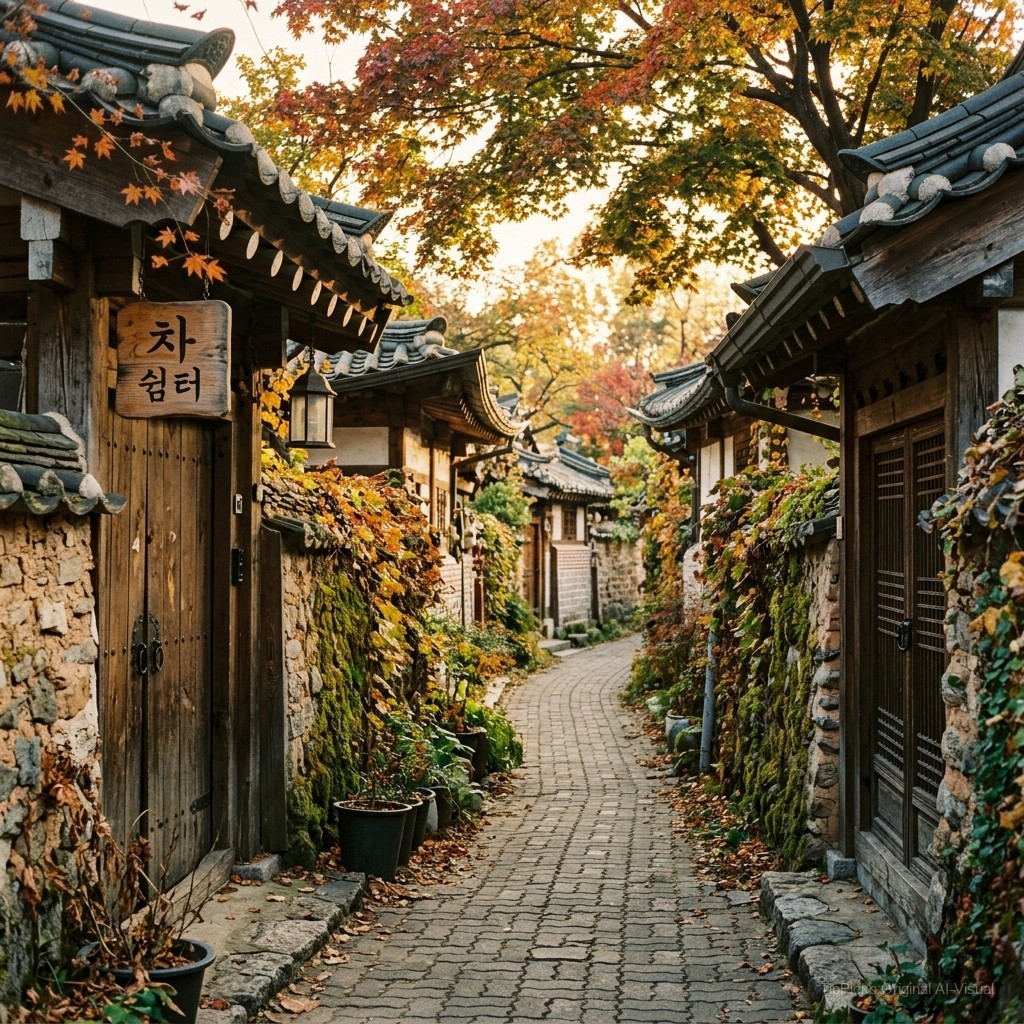
▲ The labyrinthine alleys of Bukchon are designed to filter out the noise, leaving only the scent of old pine and rain.
The Philosophy of the Korean Dawon
To understand a dawon, you have to understand darye—the art of tea. Unlike the rigid, almost mathematical precision of some East Asian tea ceremonies, Korean tea culture is marked by a certain breathable lightness. It is less about performing a script and more about cultivating a state of mind. You aren’t there to witness a show; you are there to exist in the space. The host brews, the steam rises, and the silence does the heavy lifting.
The flavors are a reflection of the Korean landscape. You’ll encounter ujeon, the prized “first rain” tea. These are the youngest leaves, harvested before the first rains of spring, resulting in a delicate, buttery sweetness that tastes like the awakening of the earth. For those seeking something more visceral, there is ssanghwatang. This isn’t just tea; it’s a medicinal tonic. A dense, dark brew of licorice, cinnamon, and jujube, it feels like a warm blanket for the internal organs.
Then there is omija-cha, the five-flavor berry tea. It is a sensory paradox, hitting sweet, sour, salty, bitter, and pungent notes all in one sip. These brews are usually served in celadon or earthenware, vessels that hold heat and ground the experience in the tactile. Most of these sanctuaries are clustered in the historic corridors of Insadong and Bukchon, or tucked into the residential stillness of Seongbuk-dong, each reflecting the unique DNA of its neighborhood.
✦ ✦ ✦
1. Dawon (다원) — The Quiet Heart of Insadong
Insadong is often a chaotic river of tourists, but Dawon acts as a breakwater. This hanok courtyard is a masterclass in spatial contrast. Step inside, and the roar of the street is replaced by the rhythmic drip of water into a stone basin. It is my most frequent haunt, primarily because of how it handles the transition from noise to stillness.
The layout consists of several intimate rooms linked by narrow wooden corridors that groan slightly underfoot. I always fight for the second-floor corner. From that vantage point, a low-slung window frames a sea of dark-tiled rooftops and a ginkgo tree that turns a violent, brilliant yellow every October. I recommend the ujeon set. It arrives in a pale celadon pot, accompanied by a small plate of chewy rice cakes and toasted nuts. The tea smells of fresh-cut grass and morning dew. Drink it in three slow, intentional sips.
The service here is an exercise in quiet pride. The staff speak minimal English, yet they communicate perfectly through a nod when your pot is low or a gentle gesture toward the tea cakes. It is a streamlined, wordless hospitality.
2. Cha Masineun Deul (차마시는뜰) — The Garden Sanctuary
The name translates to “a garden where people come to drink tea,” and it is a literal promise. Finding this place requires a small act of courage. It is tucked behind an unmarked wooden gate in Samcheong-dong that looks like the entrance to a private home. Most people walk right past it. Push the gate open. You won’t be intruding.
The interior is a sloping landscape of moss-covered stones, winding paths, and a wooden deck that hovers over a trickling stream. The seating is located in a low annex where paper screen windows filter the sunlight into a soft, milky glow. The owner blends her own herbs—chrysanthemum and mugwort grown on-site—with high-grade leaves sourced from the Boseong tea fields. It feels less like a business and more like a guest’s invitation into a private botanical study.
The chrysanthemum and honey tea (국화꿀차) is a standout, offering a floral sweetness that lingers. Pair it with the seasonal tteok (rice cake), which is handmade daily. If the chalkboard mentions a specialty of the day, trust it implicitly.
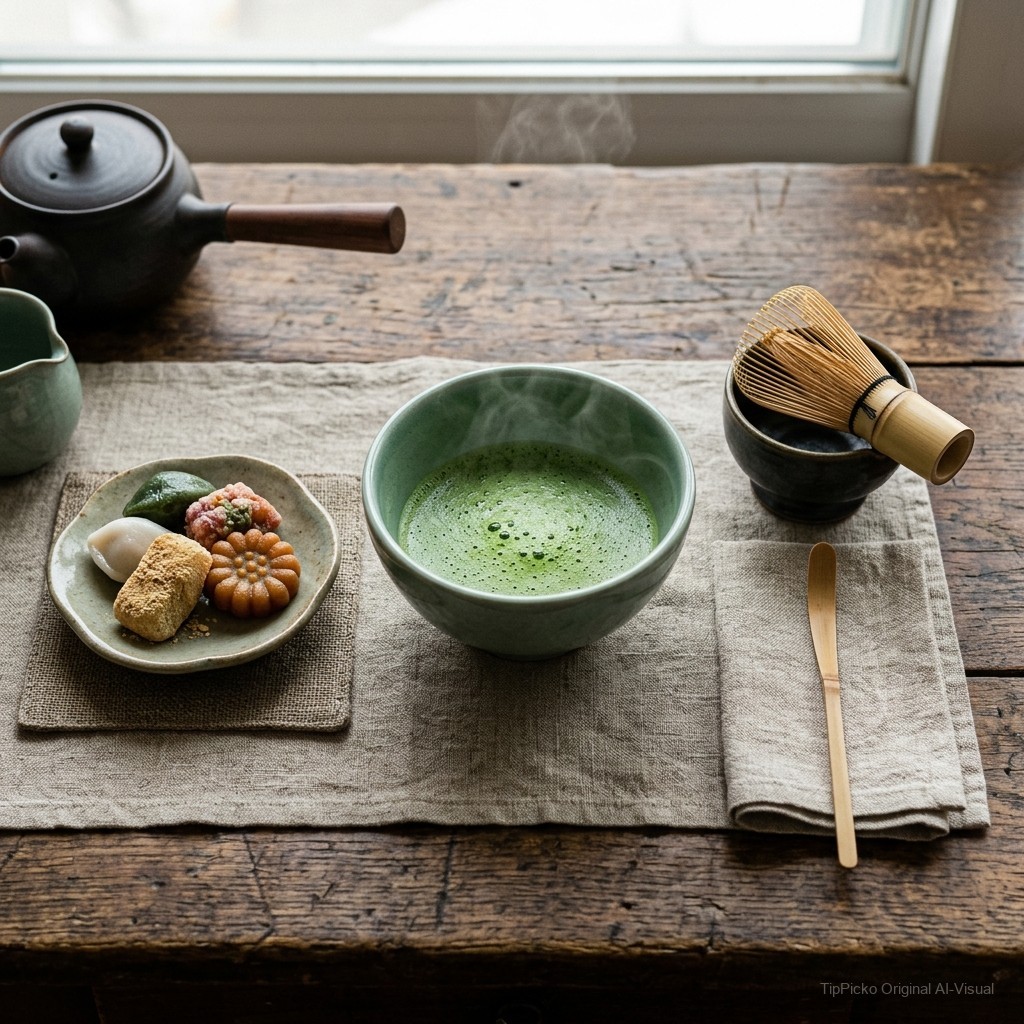
▲ The beauty lies in the imperfection—the weight of the handmade ceramic, the floating leaf, the slow drift of steam.
3. Gahoe Dawon (가회다원) — Rooftops and Reflection
Located near the summit of Bukchon Hanok Village, Gahoe Dawon provides a visual perspective that few other spots can match. From the upper floor, the traditional grey-tiled rooftops of the village cascade down toward Gyeongbokgung Palace, with the rugged silhouette of Bugaksan mountain standing guard in the distance. It is a view that reminds you that Seoul was a city of mountains long before it was a city of steel.
The structure is a meticulously restored hanok, featuring original clay walls and heavy, dark wooden beams that smell of aged pine. The owner is an artist of the subtle; you’ll find a single stem of forsythia in spring or a dried lantern flower in autumn placed precisely in each room. The tea menu is a deep dive into fermentation. You can find white tea (백차) and rare yellow tea (황차) that has been aged for three years to mellow its bitterness.
The premium tasting set (₩18,000) is an education. It includes three distinct teas with brief notes provided by the owner. It is a slow, curated experience that justifies every won.
4. Sunseon Dawon (순선다원) — The Zen of Seochon
If Insadong is the commercial heart of tradition, Seochon is its poetic soul. It is the neighborhood of writers and painters, characterized by a softer, more residential energy. Sunseon Dawon fits this mood perfectly. It is a space of austerity and intention, where the lack of ornament is the primary ornament.
The owner spent a decade studying temple tea culture, and it shows. There are only four tables. No background music. The only soundtrack is the pour of water and the faint, woody scent of sandalwood incense. Brewing here is treated as a spiritual practice rather than a service. You don’t just order a drink; you enter a state of mindfulness.
The temple tea set (사찰다도체험, ₩15,000) is the reason to visit. It begins with a silent demonstration of the darye—the warming of the pot, the circular pour, and the two-handed reception of the cup. You are not required to follow the rules, but you will find yourself naturally mirroring the stillness of the room.
5. Gogung Dawon (고궁다원) — The Palace Gateway
For those who find the deep silence of Seochon intimidating, Gogung Dawon is the perfect entry point. Located just outside the western gate of Gyeongbokgung Palace, it is an accessible piece of tradition. While it sees more foot traffic than the others, the thick paper screens (hanji) act as an acoustic filter, absorbing the city’s noise and leaving a soft hum inside.
The true draw here is the hangwa—traditional Korean confectionery. While other houses provide a single cake, Gogung offers a rotating platter of honey-bound walnut cookies, pressed rice medallions, and yaksik (a sweet, sticky glutinous rice mixed with jujubes and chestnuts). It is nostalgic, comforting, and deeply satisfying.
The tea is reliable and classic. Strong, toasted barley tea in the summer and a spicy, warming ginger brew in the winter. The traditional tea and dessert set (₩16,000) is the gold standard here.
6. Yeonhui Dawon (연희다원) — The Artist’s Retreat
Yeonhui-dong is a neighborhood of architects and intellectuals. It has a distinct scent—a mix of old bookstores and roasting coffee. Yeonhui Dawon is a secret held by locals, marked only by a small pot of seasonal wildflowers in the window. There is no flashy sign, and the entrance is modest.
Inside, the space functions as a living gallery. The walls are adorned with ceramics and paintings from local artists that rotate monthly. The owner, a former art historian, has curated the environment so that the art on the walls speaks to the tea in your cup. It is a sophisticated intersection of taste and sight.
The tea selection focuses on rare regional varieties, specifically Hadong ujeon and wild tea from the Jiri mountains. For the adventurous, try the eight-year-old fermented tea from Jeollanam-do. At ₩18,000, it is a complex, earthy brew that rewards a patient palate.
7. Inhwagak Dawon (인화각다원) — The Scholar’s Estate
Seongbuk-dong is the Seoul of a different era—a place of ancient trees and a scholarly, literary melancholy. Inhwagak Dawon is housed in a converted scholar’s residence, the kind of estate where a Joseon-era official would have composed poetry and managed provincial affairs. The scale here is grander, with wide wooden verandas that wrap around a formal stone courtyard.
The atmosphere is one of profound dignity. In autumn, a massive ginkgo tree drops gold leaves onto the grey stone with a slow, rhythmic grace. It is the place I bring people when they need to heal or think. There is something about the proportions of the house that makes your own problems feel smaller and more manageable.
The ceremonial tasting flight (₩22,000) is the definitive experience here. You are served five distinct teas—white, green, yellow, oolong, and fermented—each in a vessel chosen for that specific leaf. The process takes nearly ninety minutes. In a city that prizes speed, this is the ultimate luxury.
✦ ✦ ✦
Cultural Nuance: Visiting with Respect
A traditional tea house is not a café. It operates on a different frequency—one of reflection rather than consumption. A few small gestures will ensure you are welcomed back and show respect to the hosts who maintain these fragile spaces.
- The Shoe Ritual: If you see a raised wooden platform or a shoe rack, leave your footwear behind. This is not just a rule; it is a transition from the “dirty” outside world to the “pure” interior space.
- The Volume of Silence: These are sanctuaries for thought. Speak in whispers. Your companions and fellow guests will appreciate the shared quiet.
- The Luxury of Time: Do not treat a dawon as a quick stop. Order one pot and commit at least forty-five minutes to the experience. Rushing through a tea ceremony is like skimming a poem.
- Mindful Photography: A polite “sajin jjikeo do dwaeyo?” (사진 찍어도 돼요?) before snapping a photo is essential. Avoid using flash, as it disrupts the meditative light of the room.
- Payment Logistics: While larger places take cards, the smallest, most authentic dawons still prefer cash. Carrying ₩30,000–₩50,000 in small bills is a wise move.
- A Simple Tool: If your Korean is limited, simply point and say “igeo juseyo” (이거 주세요)—”please give me this one.” It is polite, effective, and always welcomed.
The Seasonal Pulse of Tea
The experience of a tea house transforms with the calendar. Spring is a time of anticipation, centered around the first ujeon harvest in late April and the scent of plum blossoms. Autumn is the most visually dramatic; the maples turn a deep crimson, and the golden light filters through the hanji paper windows, creating an amber glow inside the rooms.
Winter is perhaps the most intimate season. There is a profound satisfaction in the contrast between the biting Seoul wind and a steaming cup of ssanghwatang while sitting on a heated ondol floor. Summer is the outlier, but it has its own magic. A cold-brew iced ujeon, served in a shallow bowl with a single floating lotus flower, is a revelation of freshness and clarity.
Common Inquiries
Q: Do I need to be fluent in Korean to enjoy these spaces?
Absolutely not. While some menus are Korean-only, most hosts are happy to help you choose via pictures or recommendations. Hospitality in a tea house is a non-verbal language.
Q: Is there a specific dress code?
There is no official dress code, but the mood is quiet and elevated. While you won’t be turned away in casual wear, avoiding gym attire is a sign of respect for the environment. Wearing a hanbok is always a beautiful touch.
Q: Are these tea houses family-friendly?
Generally, yes. Children often enjoy sikhye (sweet rice punch) or barley tea. However, be mindful that floor-sitting can be difficult for very young toddlers. Gogung Dawon is usually the most accommodating for families.
Q: What is the average cost per person?
Budget between ₩10,000 and ₩20,000. Premium tasting flights can go up to ₩22,000. This usually includes a high-quality pot of tea and a traditional sweet.
Q: Is it awkward to visit a traditional tea house alone?
Quite the opposite. Solo visitors are extremely common and often the most welcome. It is the ideal way to experience the space—you can read, observe, and truly remain unhurried.
The Art of Nunchi
There is a subtle Korean concept called nunchi (눈치)—the ability to listen with your eyes and read the unspoken mood of a room. A great tea house is a place where everyone is practicing a collective kind of nunchi. You sense when the host is about to refill your cup; you sense the need for silence from the person at the next table; you sense the shift in the wind outside.
You aren’t expected to master this on your first visit. Simply arrive with a spirit of curiosity and a willingness to let go of your schedule. That is enough. The tea, the architecture, and the silence will handle the rest.
These seven tea houses are different arguments for the same truth: that Seoul, despite its obsession with the future, still holds onto its ancient quiet. They reward the traveler who is willing to wander, who isn’t afraid of a wordless encounter, and who knows how to push open an unmarked gate.
Editor’s Pro Tip
To experience the most authentic “slow-life” afternoon in Insadong, skip the main street and seek out the smallest alleyways. Order a ‘Ssanghwa-cha’ (medicinal tea) and pair it with ‘Garae-tteok’ (grilled cylinder rice cakes) toasted over charcoal. It is a rustic combination that tastes like the heart of old Korea.