`? Yes.
* *Check:* Did I keep `
| Train Type | Operator | Seoul Departure Station | Speed & Features | Best For… |
|---|---|---|---|---|
| KTX (High-Speed) |
Korail | Seoul Station (Central) Yongsan Station |
Up to 305 km/h. Extensive network covering the entire country. |
Travelers staying in central Seoul (Myeongdong, Hongdae, Jongno). Included in Korail Pass. |
| SRT (High-Speed) |
SR | Suseo Station (Southeast Seoul / Gangnam) | Up to 300 km/h. Slightly cheaper and 10 mins faster to Busan. |
Travelers staying in the Gangnam or Jamsil areas. (Note: Korail Pass NOT valid). |
| ITX-Saemaeul (Intercity) |
Korail | Seoul / Yongsan / Cheongnyangni | Up to 150 km/h. Slower, stops at smaller regional cities. |
Budget travelers or those visiting smaller towns not serviced by KTX. |
`? Yes.
* *Check:* Did I keep image sources exactly? Yes.
* *Check:* Are there “ultimate” or “perfect” words? (Remove “Ultimate” from H1/H2 as per instructions, replace with “Comprehensive” or “Master Guide”).
* *Check:* Character count? I will ensure detailed descriptions to hit that 5k-8k range.

Mastering the KTX:
A Comprehensive Guide to Korea’s High-Speed Rail
Navigate South Korea with ease, from the neon lights of Seoul to the coastal breezes of Busan.
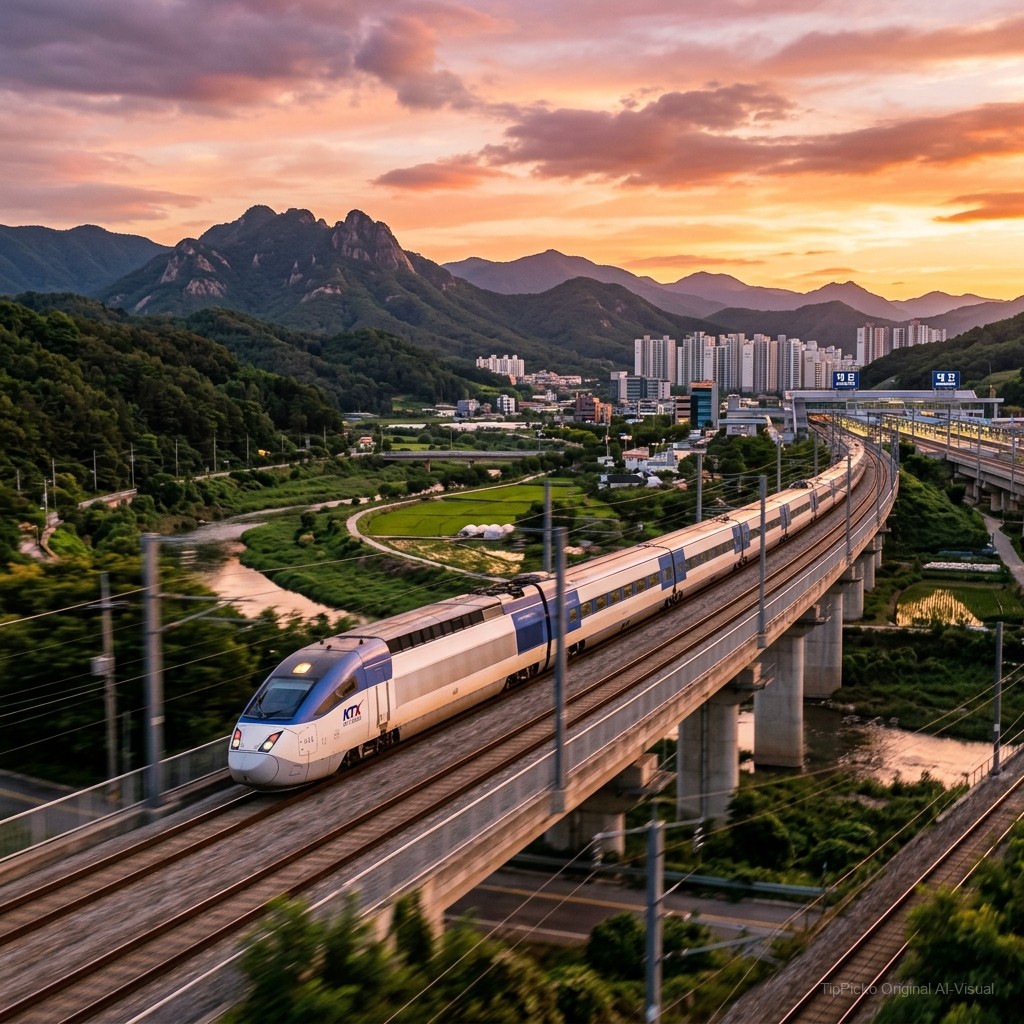
There is a specific kind of magic in watching the urban sprawl of Seoul dissolve into a blur of emerald mountains and terraced rice paddies. The KTX (Korea Train eXpress) isn’t just a mode of transport; it’s the backbone of Korean travel. For those unfamiliar with the system, the scale can seem daunting. Yet, the reality is a masterclass in efficiency. A journey to Busan, which once felt like a cross-country odyssey, now takes roughly 2.5 hours. It’s fast. It’s punctual. It’s an experience in itself.
Whether you are planning a tight ten-day itinerary or a slow-paced exploration of the provinces, knowing the nuances of the rail network saves more than just time—it saves you from the stress of sold-out trains and confusing platforms. This guide moves beyond the basics, offering the kind of insider knowledge you’d get from a local, ensuring your transition from the city to the countryside is seamless.
Why the Rail Network Wins
- Center-to-Center Logic: Skip the two-hour commute to outlying airports. KTX stations are strategically placed in city hearts, meaning you step off the train and immediately into the action.
- Reliability: In Korea, “on time” means exactly that. The precision of the KTX schedule is legendary, making it the most dependable way to coordinate tight connections.
- Onboard Comfort: Beyond the legroom, the trains offer a sanctuary of quiet. With free Wi-Fi and power outlets at every seat, it’s a productive space for digital nomads or a relaxing lounge for sightseers.
- Visual Storytelling: While flying skips the scenery, the KTX provides a panoramic view of Korea’s diverse geography, crossing bridges over wide rivers and tunneling through ancient granite peaks.
Decoding the Tracks: KTX, SRT, and ITX
Newcomers often mistake all Korean trains for the same thing. They aren’t. Depending on where your hotel is located in Seoul, choosing the wrong train type could add an hour of unnecessary traffic to your morning.
| Train Type | Operator | Seoul Departure Station | Speed & Features | Best For… |
|---|---|---|---|---|
| KTX (High-Speed) |
Korail | Seoul Station (Central) Yongsan Station |
Up to 305 km/h. Extensive network covering the entire country. |
Travelers staying in central Seoul (Myeongdong, Hongdae, Jongno). Included in Korail Pass. |
| SRT (High-Speed) |
SR | Suseo Station (Southeast Seoul / Gangnam) | Up to 300 km/h. Slightly cheaper and 10 mins faster to Busan. |
Travelers staying in the Gangnam or Jamsil areas. (Note: Korail Pass NOT valid). |
| ITX-Saemaeul (Intercity) |
Korail | Seoul / Yongsan / Cheongnyangni | Up to 150 km/h. Slower, stops at smaller regional cities. |
Budget travelers or those visiting smaller towns not serviced by KTX. |
The Local’s Perspective: If you are staying in Myeongdong, Insadong, or Hongdae, the KTX from Seoul Station is your gold standard. However, if your base is in the glittering skyscrapers of Gangnam or the residential hubs of Songpa, the SRT via Suseo Station is a game-changer. It bypasses the congested city center entirely. For those heading toward the scenic vistas of Gapyeong or the cafes of Chuncheon, the ITX-Cheongchun is the specialized choice, offering wide windows designed specifically for sightseeing.
The Art of Booking: Securing Your Seat
Booking a ticket is straightforward, but timing is everything. Korea’s rail system is highly competitive. During Chuseok (Harvest Festival) or Seollal (Lunar New Year), tickets vanish in seconds. Even on standard weekends, Friday afternoon and Sunday evening slots are prized commodities. Don’t leave it to chance.

Navigating the KorailTalk App
Forget printing paper tickets. The KorailTalk app is the modern way to travel. It handles everything from booking to modifications in a few taps.
- Setup: Install KorailTalk and immediately toggle the language to English in the top-right menu.
- The Search: Enter your origin and destination. Be precise with the station names, as some cities have multiple stops (e.g., Busan vs. Ulsan).
- Class Selection: Economy is perfectly comfortable for most. First Class offers wider seats and a quieter atmosphere, which is worth the upgrade for trips exceeding three hours.
- The Seat Map: Don’t just accept the auto-assigned seat. Manually select your spot to ensure you’re away from the noisy carriage doors or positioned for the best view.
- Payment: The system accepts major international cards. If you encounter a payment error, double-check that your card is authorized for international transactions.
⚡ Directional Awareness: Forward vs. Backward
Unlike airplanes, KTX seats can face either direction. Some travelers find facing backward unsettling; others find it a great way to watch the landscape recede. If you struggle with motion sickness, look for the arrow in the app indicating the train’s direction. Also, look for the “Family Seats”—four seats facing each other with a shared table. These are excellent for groups but can be noisier than standard rows.
The Korail Pass: A Strategic Analysis
The Korail Pass is a specialized product for foreign tourists, offering a set number of journeys over a specific window. But is it actually a bargain? It depends on your appetite for movement.
- Consecutive Pass: Best for “blitz” trips where you move every single day for 3 or 5 days.
- Flexible Pass: Ideal for those who want to spend a few days in one city before jumping to the next.
The Math: A round trip from Seoul to Busan is roughly 120,000 KRW. A 2-Day Flexible Pass sits around the same price point. If your trip is just Seoul → Busan → Seoul, standard tickets are simpler. However, if you add a detour to the ancient tombs of Gyeongju or the food markets of Jeonju, the Pass becomes an immediate financial win.

Station Rituals and Onboard Etiquette
Entering a Korean train station feels more like entering a modern airport terminal than a traditional railway. It’s clean, efficient, and largely automated. However, the boarding process is surprisingly relaxed.
You won’t find turnstiles or ticket gates at KTX platforms. This is an honor system. You simply check the digital boards for your platform number, walk to the designated boarding area, and step on. The conductors carry handheld tablets that show them in real-time which seats are occupied. Unless you are sitting in someone else’s seat, they rarely ask to see a ticket. It’s a seamless experience that removes the friction of boarding.
🧳 Luggage Logistics
Small bags go in the overhead racks. For the “big” suitcases, look for the dedicated luggage areas located at the ends of each carriage. These racks are open-concept; there are no locks. While Korea is remarkably safe, the real challenge is space. During peak hours, these racks fill up fast. If you have a massive suitcase, board as early as possible to claim your territory.
Curating Your Journey: Top Destinations
The KTX shrinks the peninsula, making it possible to experience three different versions of Korea in a single weekend. Here are the must-visit hubs accessible from Seoul in under three hours.
- Busan (The Coastal Giant): Roughly 2.5 hours. From the colorful houses of Gamcheon Culture Village to the sweeping sands of Haeundae, Busan offers a grit and energy that differs from Seoul. Don’t miss the Jagalchi Fish Market for a raw look at Korea’s maritime culture.
- Gyeongju (The Open-Air Museum): Accessible via Singyeongju Station. This was the capital of the Silla Kingdom for nearly a millennium. You can wander through royal tumuli (burial mounds) that look like green hills and visit the breathtaking Bulguksa Temple.
- Jeonju (The Taste of Tradition): A 1.5-hour ride. This city is the spiritual home of Bibimbap. The Jeonju Hanok Village is one of the best places to rent a Hanbok and walk through traditional wooden houses.
- Gangneung (East Coast Escape): Reached via the KTX-Eum. This is where the mountains meet the East Sea. It’s famous for its coffee culture—the Anmok Coffee Street is a mandatory stop for any caffeine enthusiast.
Common Hurdles & Expert Solutions
The beauty of the KTX lies in its ability to make a foreign land feel accessible. By shifting your perspective from “how do I get there” to “how do I experience the journey,” the train ride becomes one of the highlights of your trip. Book early, secure a window seat, and let the Korean landscape unfold before you.