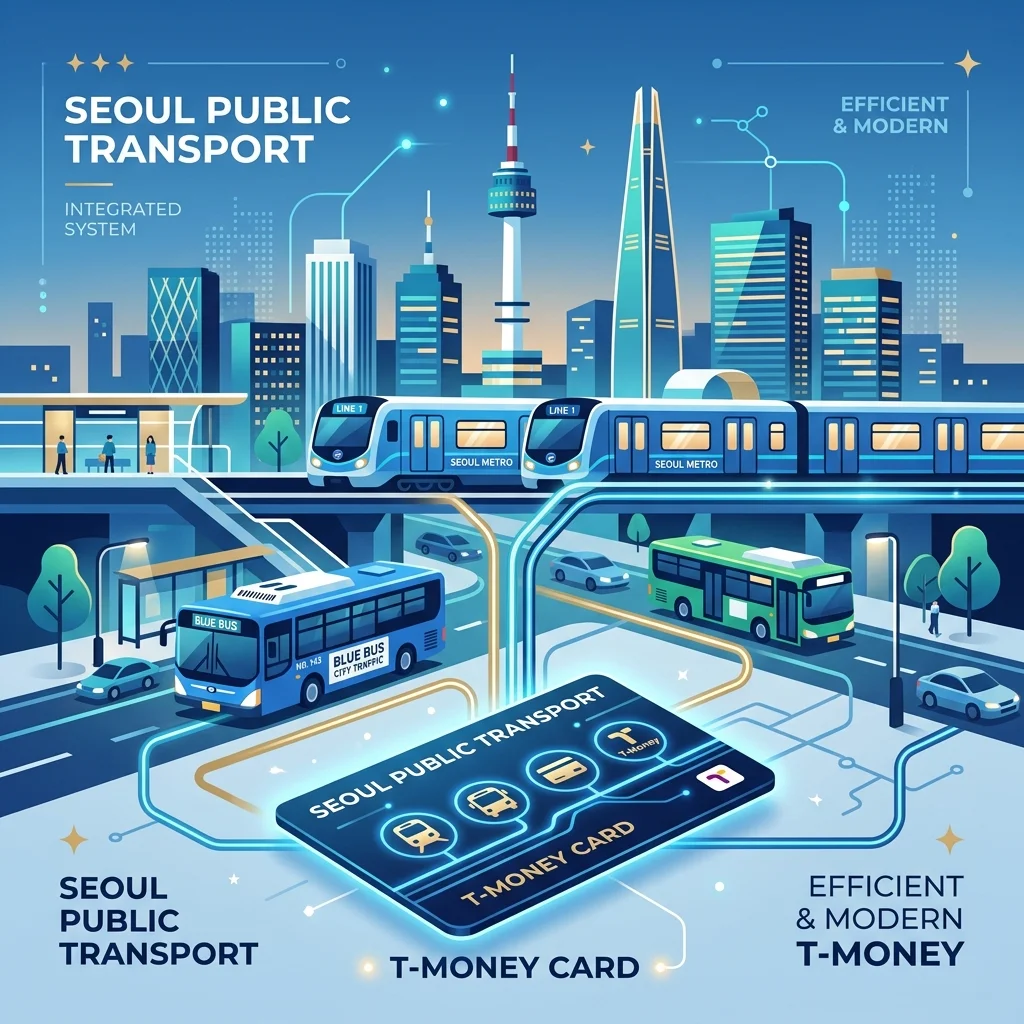
Navigating a metropolis as sprawling and energetic as Seoul can be a dizzying experience for first-timers. Between the neon-lit corridors of Myeongdong and the quiet alleys of Bukchon, the sheer scale of the city’s transit network is impressive, but calculating fares for every single trip is a chore. Enter the Seoul Climate Card. This isn’t just another transit pass; it’s a strategic move by the city to streamline travel and promote eco-friendly commuting. For international visitors, the introduction of short-term tourist passes removes the guesswork. Instead of topping up a balance every few hours, you can now lock in a flat rate for unlimited rides.
Seoul’s transit system is legendary for its punctuality and cleanliness. Still, the costs add up. If you’re the type of traveler who likes to wake up and decide where to go on a whim, the standard “pay-as-you-go” model can feel restrictive. The municipal government designed these short-term passes specifically for the “exploratory” traveler. Whether you are here for a quick 48-hour layover or a full week of deep-diving into K-culture, there is a tier that fits. By paying a single fee, you eliminate the anxiety of “insufficient balance” messages at the turnstile, allowing you to focus on the destination rather than the cost of the journey.
01. More Than Just a Ticket: The Vision Behind the Card
Seoul is pushing for a greener future. The Climate Card is a centerpiece of this effort, aimed at reducing private car usage by making the public transit system an irresistible alternative. While the monthly version serves residents, the short-term tourist passes are a nod to the millions of visitors who flock to the city annually. It simplifies the “first-mile, last-mile” problem. Instead of juggling different payment methods for buses and trains, everything is consolidated into one chip.
The beauty of this system lies in its simplicity. You aren’t buying “trips”; you are buying “time.” Once the pass is active, the psychological barrier to exploring a new neighborhood vanishes. Want to see a hidden cafe in Seongsu-dong? Just hop on the subway. Want to take a detour to a palace you missed? Just tap and go. This freedom is what makes the Climate Card a game-changer for the modern tourist who values spontaneity over a rigid itinerary.
02. Choosing Your Tier: Pass Options and Pricing
Not every trip to Seoul is the same. Some visitors are here for a whirlwind weekend, while others are spending a week immersing themselves in the city. To handle this, the city offers five distinct tiers. All of them provide the same unlimited access—the only difference is the clock.
To put these prices in perspective, consider the base fare. A standard subway trip costs 1,400 KRW. Mathematically, if you take just four trips in a single day, the 1-day pass has already paid for itself. As you move into the 5-day and 7-day tiers, the daily cost drops to a fraction of the standard fare. It turns transit from a recurring expense into a negligible one.
03. The Great Debate: Climate Card vs. T-Money
You will likely see T-money cards everywhere—in convenience stores and vending machines. It is the gold standard for pay-as-you-go travel. But is it better than the Climate Card? It depends on your pace. T-money is a wallet; you put money in, and it drains as you travel. The Climate Card is a subscription; you pay once and forget about it.
| Comparison Parameter | Seoul Climate Card (Short-Term) | Standard T-Money Card |
|---|---|---|
| Initial Card Cost | 3,000 KRW (non-refundable) | 3,000 to 5,000 KRW (non-refundable) |
| Top-Up Mechanism | Fixed upfront flat fee | Manual reloads based on consumption |
| Subway Ride Limits | Unlimited within active days | Deducted per journey based on distance |
| Public Bus Ride Limits | Unlimited within active days | Deducted per journey based on distance |
| Fare Structure | Fixed flat rate | Distance-based increments |
| Best Suited For | Active tourists taking 3-4+ rides daily | Long-term residents or low-frequency riders |
The mental load is the real differentiator. With T-money, you have to keep an eye on your balance. There is nothing more frustrating than being blocked at a turnstile during rush hour because you’re 200 KRW short. The Climate Card eliminates this friction. However, keep in mind that T-money is more versatile—it can be used for taxis and some convenience store purchases, which the Climate Card’s unlimited pass feature does not cover.
04. Real-World Scenarios: When Does the Pass Pay Off?
Let’s look at two common tourist personas to see how the math actually shakes out. Most visitors underestimate how often they’ll use a bus or train in a city as large as Seoul.
Scenario A: The Heritage Hunter
Focusing on the historic center, this traveler moves between palaces, traditional villages, and art galleries.
- Myeongdong $\rightarrow$ Gyeongbokgung (Subway: 1,400 KRW)
- Gyeongbokgung $\rightarrow$ Insadong (Bus: 1,400 KRW)
- Insadong $\rightarrow$ Bukchon (Walk: 0 KRW)
- Bukchon $\rightarrow$ Dongdaemun Design Plaza (Subway: 1,400 KRW)
- DDP $\rightarrow$ N Seoul Tower Base (Bus: 1,400 KRW)
- N Seoul Tower $\rightarrow$ Hotel (Subway: 1,400 KRW)
Scenario B: The Urban Explorer
This traveler is crossing the city, from the youth culture of Hongdae to the luxury of Gangnam.
- Hotel $\rightarrow$ Hongdae (Subway: 1,400 KRW)
- Hongdae $\rightarrow$ Yeouido Han River (Subway: 1,500 KRW)
- Yeouido $\rightarrow$ Gangnam Station (Subway: 1,700 KRW)
- Gangnam $\rightarrow$ Banpo Bridge Fountain (Bus: 1,400 KRW)
- Banpo $\rightarrow$ Myeongdong (Subway: 1,500 KRW)
As the simulations show, the break-even point is remarkably low. If you plan on doing more than three distinct trips a day, the Climate Card isn’t just a convenience—it’s a financial win.
05. Getting Started: A Step-by-Step Acquisition Guide
The process is intuitive, but there is one critical detail most tourists miss: the payment method. Follow these steps to avoid confusion at the station.
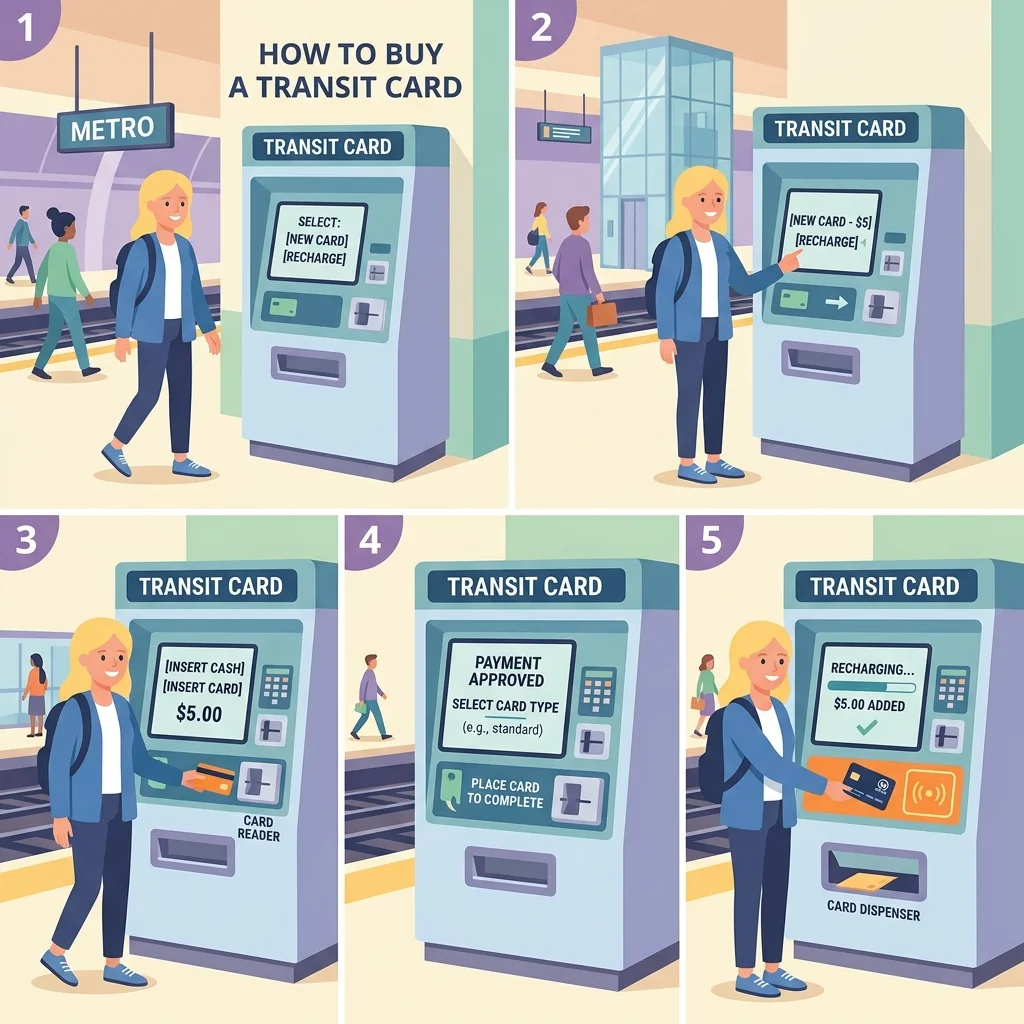
Grab the Physical Card
You can’t download this pass. You need the physical plastic. Head to a convenience store (CU, GS25, 7-Eleven) near a subway station or a tourist info center. The card itself costs 3,000 KRW. This is a one-time hardware fee, not the pass itself.
Find a Reload Machine
Every Seoul subway station (Lines 1-9) has automated recharging kiosks. These machines are multilingual. Select English immediately to make the process seamless.
Select Your Pass Duration
Place your card on the sensor. Navigate to the “Short-term Pass” menu. Choose the duration (1, 2, 3, 5, or 7 days) that matches your stay. Don’t overbuy; you can always add another pass later.
The Cash Requirement
This is the most important part: these machines only accept cash (KRW). Credit cards generally do not work for the reloading process. Ensure you have physical bills and coins before you head to the machine.
Tap and Explore
Once the machine confirms the charge, you’re set. Tap the card on the reader at the turnstile. Instead of a balance, the screen will show you how many days of validity remain.
For the latest operational changes or transit maps, the official Seoul Metropolitan Government portal at https://english.seoul.go.kr is the only source you should trust for real-time updates.
06. The Fine Print: Coverage and “The Boundary”
Unlimited doesn’t mean “everywhere.” The Climate Card is a municipal project, meaning it respects city borders. If you venture too far into the surrounding Gyeonggi Province, you might run into a few hurdles.
Subway Nuances
- The Green Zone: All standard lines (1-9, Ui-Sinseol, Sillim, Gyeongui-Jungang, etc.) are covered as long as both your start and end points are within Seoul.
- The Exception: The Shinbundang Line is privately operated. It is not covered by the Climate Card. You will need to use T-money or cash for this specific line.
- The Boundary Issue: If you exit at a station outside Seoul (e.g., Suwon), the gate won’t open. Don’t panic. Just go to the staff booth, pay the difference in cash, and they will let you through.
- AREX: The All-Stop train is covered within Seoul limits. The Express train to Incheon Airport is not.
Bus Nuances
- Covered: Blue (main trunk) and Green (local feeder) buses operating within the city.
- Not Covered: Red express buses (which travel to the suburbs) and private Airport Limousines. If you see a red bus, assume you’ll need separate payment.
Ttareungyi: The Bike Perk
Some pass bundles include the Ttareungyi public bike system. If your version includes this, link the card to the app. It’s the best way to see the Han River parks without the stress of traffic. Just remember to dock the bike properly, or you’ll be charged extra.
07. Quick Fixes: Common Traveler Questions
We’ve compiled a few real-world queries from travelers to help you avoid common pitfalls.
Frequently Asked Questions (FAQ)
Is there a mobile app for tourists to avoid the physical card?
Can I get a refund for unused days on my pass?
Does the card work for taxis?
Final Thoughts for Your Journey
The Seoul Climate Card is a rare win-win for both the city and the visitor. It reduces the environmental footprint of tourism while giving you a predictable, low-cost way to see every corner of the capital. While the “cash-only” reload rule is a slight inconvenience, the freedom it grants you once you’re on the move is far more valuable. Pack some Korean Won, grab your card at the airport or a convenience store, and let the city’s incredible infrastructure guide you to your next favorite discovery.
Transforming dense transit data and cultural complexities into clear, actionable travel intelligence for explorers in South Korea.
TRAVEL WRITER
✓ Verified
Updated 2026.05