Seoul Lifestyle & Outdoor Experience Series
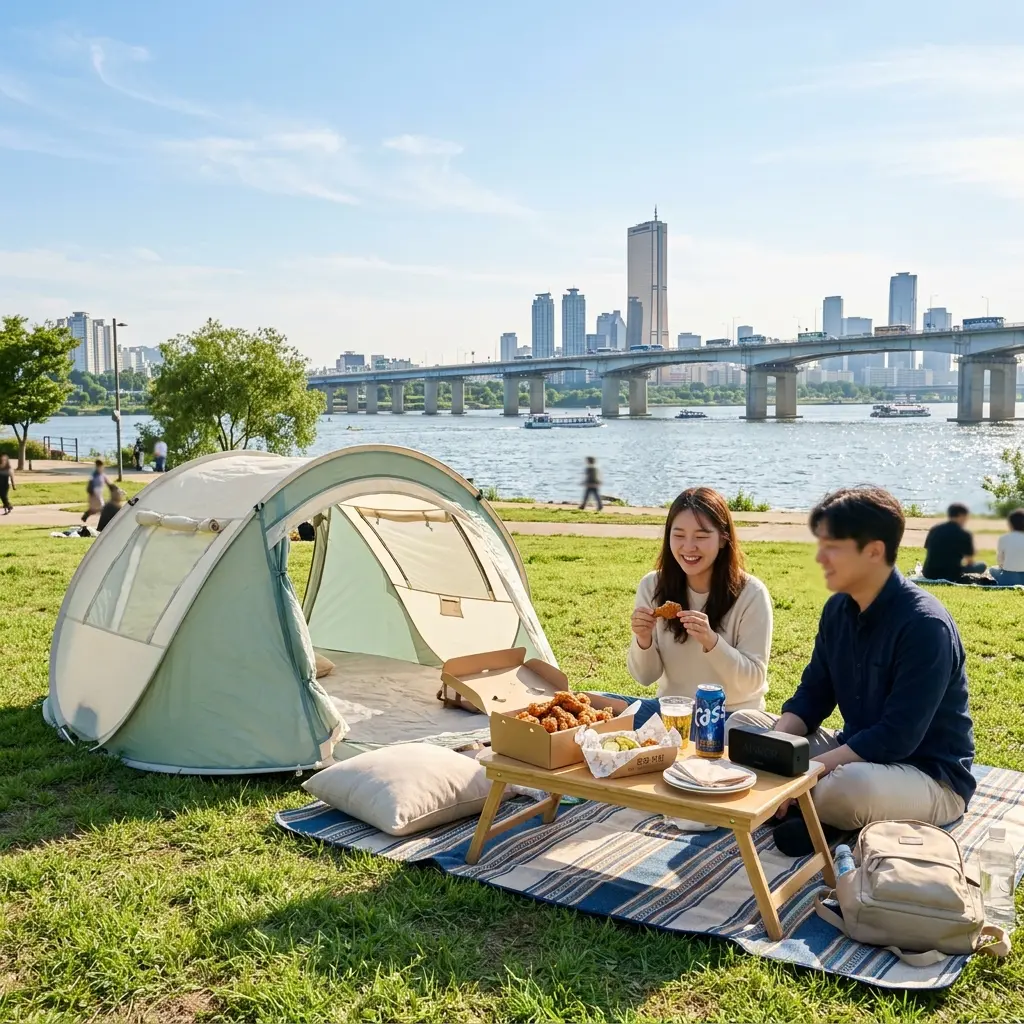
There is a specific kind of magic that happens where the glass skyscrapers of Seoul meet the gentle currents of the Hangang. For those living in the city’s relentless pace, a riverside picnic is more than a leisure activity; it is a necessary mental reset. It is the art of “slow living” in one of the world’s fastest cities. Whether you are imagining a romantic sunset with a view of the bridge or a loud, laughter-filled afternoon with a group of friends, the riverbanks provide the perfect canvas. From the strategic placement of your mat to the logistical puzzle of ordering fried chicken to a nameless patch of grass, there is a rhythm to this experience. This Han River Picnic Guide breaks down the nuances of 2026 riverside culture, ensuring your outing feels like a local tradition rather than a tourist excursion.
2. Navigating 2026 Tent Etiquette & Regulations
3. The Rental Ecosystem: Finding Your Perfect Setup
4. The “Baedahl” Experience: Ordering Food to the River
5. Expert Packing List for a Seamless Day
6. Essential Practicalities (FAQ)
1. Choosing Your Vibe: Yeouido, Banpo, or Mangwon?
Seoul is blessed with eleven official Hangang parks, but for a first-timer or a seasoned visitor, three locations define the experience. Each offers a completely different energy, and picking the wrong one can mean the difference between a serene escape and an overwhelming crowd.
Yeouido Hangang Park is the beating heart of the river. Accessible via Yeouinaru Station (Line 5), this is where the “picnic industry” is most concentrated. It is high-energy. If you want to be in the center of the action—surrounded by street musicians, hundreds of colorful tents, and a constant stream of delivery bikes—this is your spot. It is particularly breathtaking during the spring cherry blossom peaks, though the crowds can be intense. It is the most convenient option for those who want every possible amenity within a five-minute walk.
Banpo Hangang Park leans into romance and sophistication. The draw here is the Moonlight Rainbow Fountain. Watching the Banpo Bridge spray synchronized, illuminated water into the night sky is a quintessential Seoul memory. Because of this, Banpo becomes the go-to for dates and evening gatherings. It feels slightly more polished than Yeouido. Access is via Sinbanpo Station (Line 9), though be prepared for a brief walk to reach the prime waterfront real estate. Pro tip: Arrive two hours before the fountain show if you want a front-row seat.
Mangwon Hangang Park is the connoisseur’s choice. It lacks the neon flash of Banpo or the scale of Yeouido, replacing them with a laid-back, “hipster” atmosphere. The real secret here is the proximity to Mangwon Market. Local regulars spend their afternoon grazing through the market’s legendary street food stalls before hauling their treasures to the river. The sunsets here are arguably the best in the city, as the western horizon remains relatively open. It is the quietest of the three, making it ideal for those who actually want to read a book or nap in the sun. Reach it via Mangwon Station (Line 6).
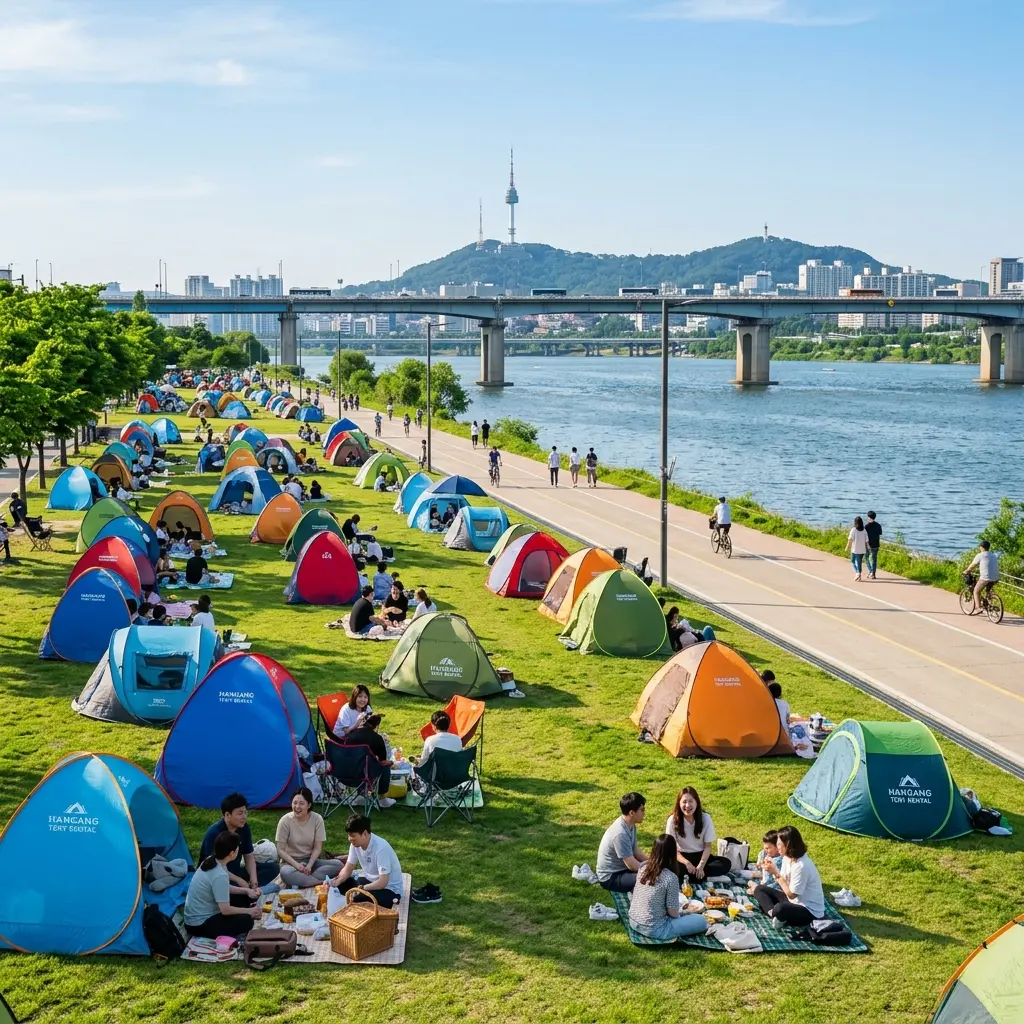
Still undecided? Use this comparison matrix from our Han River Picnic Guide to match the park to your mood:
| Comparison Factors | Yeouido Hangang Park | Banpo Hangang Park | Mangwon Hangang Park |
|---|---|---|---|
| Subway Access | Excellent (Yeouinaru Exit 2/3 direct) | Moderate (Sinbanpo Exit 1, 15m walk) | Fair (Mangwon Exit 2, 20m walk) |
| Crowd Level | Very High (Very Crowded) | High (Evening Peak) | Moderate (Relaxed) |
| Key Highlights | Busking, Multi-plaza, cruises | Moonlight Rainbow Fountain show | Market street food, sunset view |
| Food Delivery | Easiest (3 large delivery zones) | Easy (2 delivery zones) | Moderate (Walking in is preferred) |
2. Navigating 2026 Tent Etiquette & Regulations
Pitching a tent by the river isn’t a free-for-all. To keep the parks from becoming permanent campsites, the Seoul Metropolitan Government enforces specific guidelines. These aren’t just suggestions; park rangers patrol the grass on bicycles, and ignoring the rules can lead to uncomfortable confrontations or steep fines.
The first rule is geography. Tents are only allowed in “Tent Permitted Areas.” You will see these marked with signs or designated by the layout of the grass. Pitching your tent on a public walkway or too close to the water’s edge is a quick way to get a warning from a ranger. If you’re unsure, a quick glance at the official Seoul Hangang Park website can help you spot the zones.
Timing is everything. Tents are generally a seasonal affair, running from April through October. In the heat of summer (June–August), you can keep your shade up from 9 AM to 8 PM. During the milder spring and autumn months, the cutoff is 7 PM. Once the clock hits the limit, the structure must come down. You can stay on your mat as long as you like, but the tent has to go. It is a collective effort to keep the park accessible for everyone.
Then there is the “Open Door” policy. Only shade tents up to 2m x 2m are permitted. Heavy camping gear is a no-go. More importantly, at least two sides of your tent must remain open. You cannot zip yourself into a private pod. This is a safety regulation to ensure visibility and prevent the tents from being used for sleeping overnight, which is strictly prohibited. If a ranger taps on your tent, just smile and unzip.
3. The Rental Ecosystem: Finding Your Perfect Setup
One of the best things about Seoul is that you don’t need to own a single piece of outdoor gear to enjoy the river. A thriving rental economy exists right at the subway exits. It is a seamless “grab-and-go” system that removes all the friction of transporting heavy equipment across the city.
A basic kit is the standard entry point. You’ll usually get a pop-up shade tent, a waterproof mat, a small folding table, and some basic cleaning supplies. For those who want a “premium” experience, upgrades include reclining chairs, Bluetooth speakers for background music, portable mood lighting for the evening, and even board games to kill time. These setups transform a simple patch of grass into a temporary living room.
Budget-wise, expect to pay around 15,000 to 20,000 KRW for a basic 4-hour window. If you’re going for the full luxury experience with a wagon and fancy chairs, it’ll be closer to 25,000 to 35,000 KRW. Extensions are usually cheap—around 5,000 KRW for a few more hours.
The process is straightforward. At Yeouinaru Station Exit 1, for instance, the basement and surrounding storefronts are lined with these shops. You pick a package from a poster, pay, and the staff loads everything into a heavy-duty folding wagon. You’ll leave a passport or ID as a deposit, which is returned the moment you bring the wagon back. It’s an efficient, trust-based system that makes the whole day feel effortless.
📋 Which Setup Matches Your Day?
Minimalist Mat & Table
Lightweight and agile. Perfect for those who want to move from spot to spot without the hassle of a tent.
Sunset Aesthetic Kit
Focused on mood: includes fairy lights, a speaker for your playlist, and cozy reclining chairs for the golden hour.
The Full Basecamp
A large shade tent, multiple mats, a massive wagon, and games. Everything you need for a long afternoon with a crowd.
4. The “Baedahl” Experience: Ordering Food to the River
In most cities, ordering food to a park is a nightmare. In Seoul, it is a science. Because the riverbanks are too vast for a driver to find “the blue mat near the big tree,” the city created Delivery Zones (Baedahl-Zones). These are designated meeting points where the digital world of apps meets the physical world of the park.
In Yeouido, you’ll find three main zones. Zone 1 is near Mapo Bridge, Zone 2 is the most popular (near Yeouinaru Station Exit 2), and Zone 3 is by the water light square. Banpo has similar designated points. The key is to set up your mat within a reasonable walking distance of one of these zones so you don’t have to hike across the park for your food.
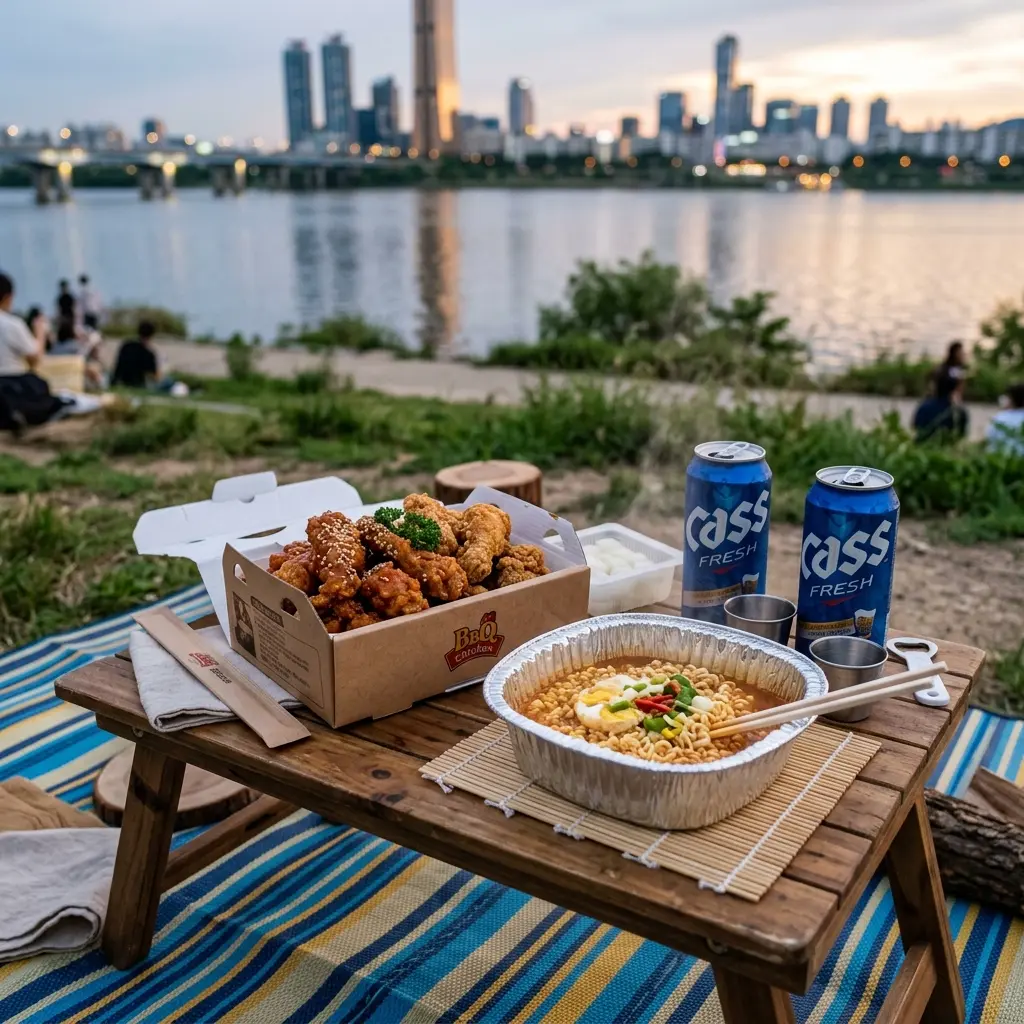
For the tech-savvy, apps like Baemin (Baedal Minjok) or Coupang Eats are the gold standard. Both have evolved to be more tourist-friendly. When you order, you don’t put in a street address; you specifically select the delivery zone. If the app is confusing, the “analog” method still works: local restaurants often have staff handing out flyers at the park entrance. You pick a menu, call the number, and they handle the rest.
🚀 How to Order Like a Pro: Step-by-Step
- Pinpoint Your Zone: Before you even open the app, look for the large, numbered “Delivery Zone” banners. This is your anchor point.
- Choose Your Feast: Fried chicken is the cliché for a reason—it’s delicious. But don’t overlook pizza or bossam (boiled pork).
- Specify the Location: In the delivery notes, clearly write: “Yeouido Delivery Zone 2” to avoid any confusion.
- The Hand-Off: When the app notifies you, walk to the zone. Look for the delivery rider with your order number. It’s usually a quick, polite exchange.
- The Reward: Return to your sanctuary and feast while watching the river flow by.
Of course, no trip to the river is complete without the legendary “Convenience Store Ramen.” These aren’t your average instant noodles. They come in foil bowls and are cooked by automated induction machines that time the boil to the second. It is a sensory experience—the steam, the smell, and the sound of the timer. For a deep dive into this specific ritual, see our Ultimate Hangang Ramen Guide.
5. Expert Packing List for a Seamless Day
While rentals cover the big stuff, the difference between a “good” picnic and a “perfect” one lies in the small details. Here is what we recommend bringing to avoid mid-afternoon frustration:
- High-Capacity Power Bank: Between navigating maps, ordering food, and taking 4K videos of the sunset, your battery will vanish. Bring a fast-charging bank.
- Heavy-Duty Wet Wipes: Korean fried chicken is glorious but greasy. Standard tissues won’t cut it; get the thick, wet wipes for a proper clean.
- A Versatile Layer: The river creates its own microclimate. A warm afternoon can turn into a chilly evening the moment the sun dips below the buildings. A light windbreaker or a cozy blanket is non-negotiable.
- Dedicated Trash Bags: Seoul takes recycling seriously. Don’t rely solely on the overflowing public bins. Bring a few bags to separate your plastics and food waste—it’s the respectful way to enjoy the park.
- Active Footwear: You’ll be traversing grass, gravel, and pavement. If you plan to rent a “Ttareungyi” (Seoul Bike) to explore further, leave the sandals at home. Check out our guide on How to Rent a Seoul Bike for more info.
6. Essential Practicalities (FAQ)
Q: Is it okay to drink alcohol at the river?
A: Yes, it is very common. Beer and Makgeolli (rice wine) are the standard pairings for picnic food. Just keep it civil. As long as you aren’t being disruptive or excessively loud, park security generally leaves you alone. Respect the peace of others, and you’ll be fine.
Q: How do I handle my trash properly?
A: This is the most important part of the “picnic etiquette.” Seoul uses a strict separation system: general waste, food waste, and recyclables. You will find large waste stations throughout the park. Never leave your trash on the grass; the “leave no trace” philosophy is strongly encouraged here.
Q: Are the restrooms accessible and clean?
A: Generally, yes. Most parks have well-maintained, free public restrooms located near convenience stores and main plazas. They are usually clean, but during peak times (like the Banpo fountain show), they can get crowded. Carrying a small pack of tissues is a smart backup, though most are well-stocked.
By treating the river with respect and planning your logistics ahead of time, you can turn a simple afternoon into a highlight of your trip. Whether you’re there for the food, the views, or the silence, the Han River offers a glimpse into the soul of Seoul. Grab your mat, pick your zone, and settle in.
TRAVEL WRITER
✓ Verified
Updated 2026.05