The Ritual of Hangang Ramen: A Local’s Guide to Seoul’s Iconic Riverside Comfort Food
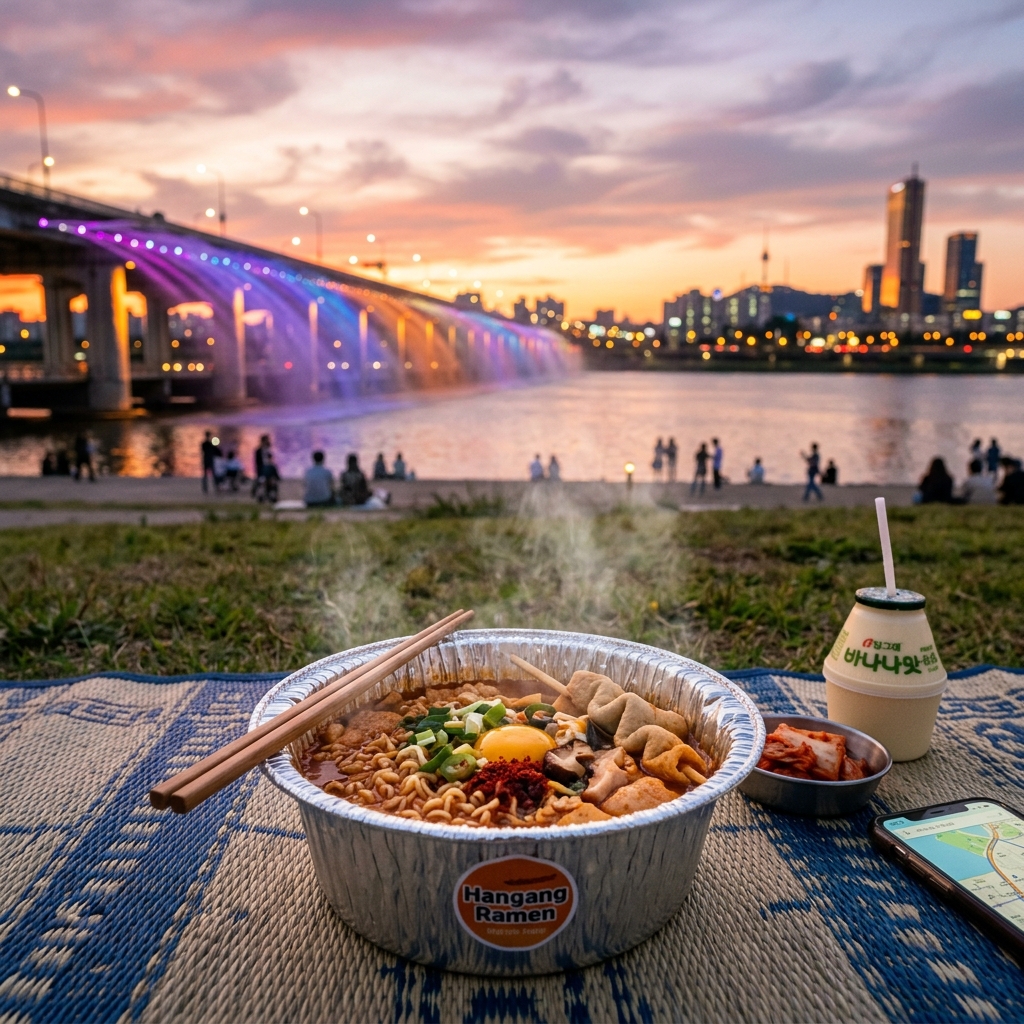
There is a specific kind of magic in the air at the Han River during twilight. As the city skyline begins to glow, thousands of Seoulites gather on colorful mats, sharing laughter and conversation. But the real centerpiece of this experience isn’t the view—it’s the smell of steaming, spicy broth wafting from the convenience store kiosks. This is the world of **한강 라면** (Hangang Ramen). It is more than just a quick meal; it is a social ritual, a slice of urban Korean life that blends the efficiency of convenience store culture with the tranquility of nature.
For a first-timer, the process might seem straightforward, but there is an art to it. From navigating the sprawling riverside parks to mastering the temperamental induction cookers, a few mistakes can mean the difference between a soggy mess and a culinary masterpiece. To help you avoid the common pitfalls, we have put together a detailed guide on where to go, how to operate the machines, and the secret combinations that the locals use to elevate their bowls.
Finding Your Spot: The Best Parks for Ramen
The Han River is vast, and not every convenience store is equipped for the full “instant ramen experience.” While most GS25 or CU stores along the river have these machines, the vibe varies significantly depending on which park you choose. **Yeouido Hangang Park** is the bustling heart of the experience, often crowded with office workers and tourists. If you prefer something more romantic, **Banpo Hangang Park** offers the stunning Rainbow Fountain as a backdrop. For a younger, more artistic crowd, **Ttukseom Hangang Park** is the place to be.
The challenge usually lies in the crowds. During peak spring and autumn weekends, the queues for the cooking machines can stretch for twenty minutes. To save time, we have analyzed the layout of the most popular hubs.
| Hangang Park | Convenience Store Branch | Pinpoint Location & Landmarks | Ramen Cookers | Crowd Level |
|---|---|---|---|---|
| Yeouido (여의도) | GS25 Yeouido Hangang Branch 1 & 2 | Near Yeouinaru Station (Line 5) Exit 2, right at the main park entrance plaza. | Over 20 units (Induction) | Very High (Weekend Peaks) |
| Banpo (반포) | GS25 Banpo Hangang Branch 1 & 2 | Near the Moonlight Rainbow Fountain viewing deck, next to Some Seavit islands. | 12 units (Induction) | High (Show Times) |
| Ttukseom (뚝섬) | CU Ttukseom Arirang Branch | Near Ttukseom Park Station (Line 7) Exit 2, inside the floating river pavilion. | 16 units (Induction + Water) | Moderate to High |
| Nanji (난지) | GS25 Nanji Hangang Branch | Located near the Nanji Campground and Mirror Fountain plaza. | 8 units (Induction) | Low to Moderate |
*A Local’s Secret for Yeouido:* Avoid the stores immediately adjacent to Yeouinaru Station. They are the most congested. Instead, take a leisurely ten-minute stroll toward Mapo Bridge. You will find smaller kiosks that are far quieter, offering a more peaceful dining experience with shorter wait times and better views of the water.
The Process: From Store Shelf to Steaming Bowl
The “Hangang Ramen” system is a marvel of Korean efficiency. It removes the guesswork of water ratios and boiling times, replacing them with a precise induction system. However, the sequence of events matters. Follow this flow to ensure your meal is cooked to perfection.
Phase One: The Selection
- **Choose Your Base:** The options are endless. If you want the classic spicy kick, go for Shin Ramyun. For something with a thicker, chewier noodle and seafood notes, Neoguri is a fantastic choice. If you are sensitive to spice, look for the “Mild” versions of Jin Ramyun.
- **The Specialized Container:** You cannot use your own bowl. The cashier will provide a silver foil container specifically designed for the induction burners. This container is usually priced around 1,000 to 1,500 KRW. It’s an essential part of the kit; without it, the machine won’t recognize the pot.
- **The “Gourmet” Add-ons:** This is where you turn a snack into a meal. Look for the refrigerated section for sliced American cheese, raw eggs, and pre-cut green onions. Many locals also grab a pack of mini Vienna sausages or a “Hetbahn” (instant microwaveable rice) to stir into the leftover broth at the end.
Phase Two: Mastering the Machine
-
**The Setup:** Break the noodles in half to ensure they fit flat in the bowl. This ensures even cooking. Pour in the soup base and dried flakes.
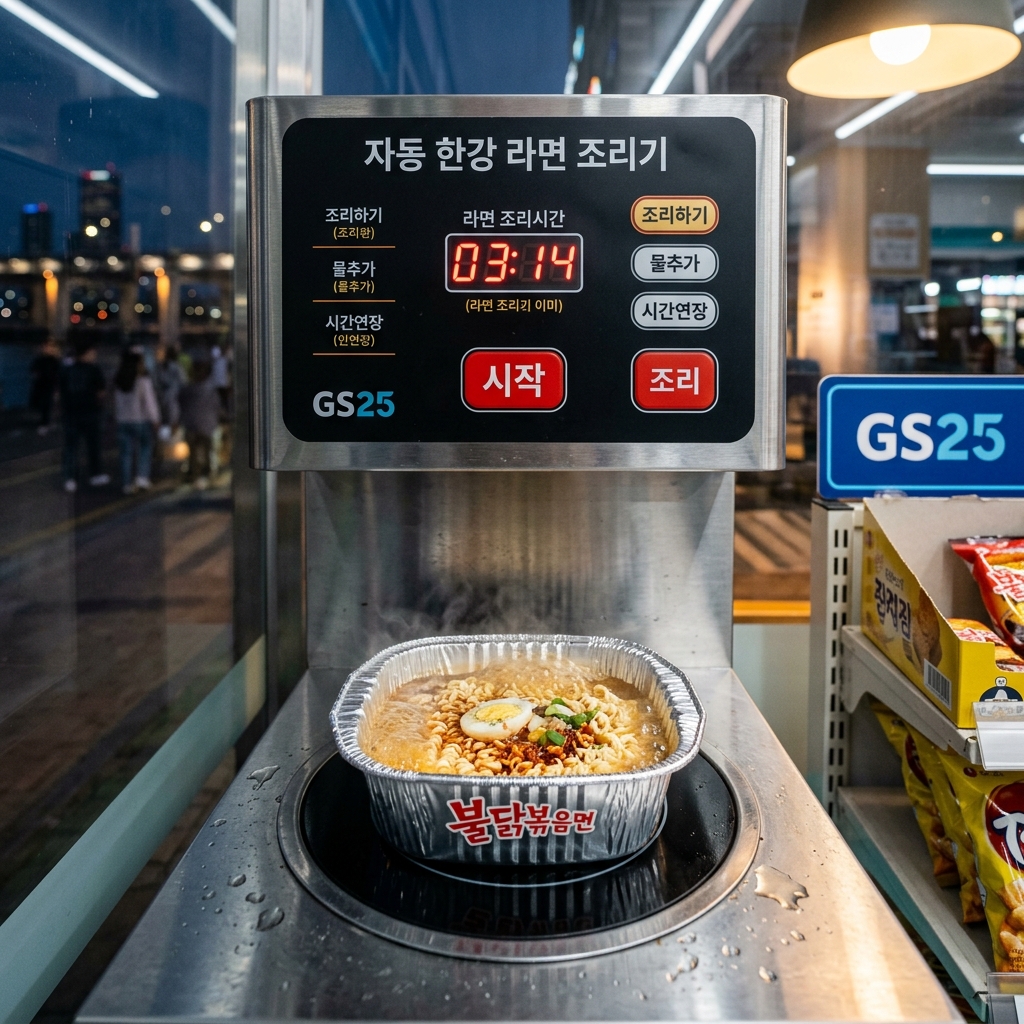
Warning: Resist the urge to add the egg now. If the egg hits the bottom of the foil before the water is boiling, it will burn and stick, which can damage the machine and leave a bitter taste in your soup. - **Scanning and Starting:** Place the bowl on the induction surface. Most machines use a barcode scanner; simply align the barcode on the side of the bowl with the sensor. Hit the **”Start” (시작)** button, and the machine will dispense the exact amount of water required for that specific brand of ramen.
- **The Active Phase:** Once the water begins to bubble, use your chopsticks to gently lift and stir the noodles. This prevents them from clumping together.
- **Adding the Toppings:** If you have cheese or green onions, add them when the timer shows about 2 minutes remaining. This allows the cheese to melt into a creamy emulsion without disappearing entirely.
- **The Egg Window:** This is the most critical step. Add your egg **exactly 60 to 90 seconds** before the timer ends. Gently crack it on top and stir slightly. This creates a soft-poached effect that thickens the broth without overcooking the yolk.
- **The Final Beep:** When the machine beeps, the heat shuts off instantly. Grab the bowl by the upper edges—these remain relatively cool—and carry it carefully back to your mat.
The Pro’s Playbook: Customizing Your Bowl
Not all noodles are created equal. A thick seafood noodle requires more heat and water than a thin wheat noodle. Most modern machines have presets, but knowing how to tweak them can elevate your meal from “good” to “restaurant quality.”
Depending on the weather—especially during the chilly Seoul winters—you may find that the water cools down faster. Understanding the relationship between water volume and noodle density is key.
| Noodle Category | Typical Brands | Preset Type | Default Time / Water | Best Custom Adjustment | Perfect Egg Addition Time |
|---|---|---|---|---|---|
| Standard Noodle (일반라면) | Shin Ramyun, Jin Ramyun, Samyang Ramen | Preset 1 (Normal) | 3 mins 30 secs / 400ml | Add +20s for slightly softer, fully cooked noodles if winds are strong. | At 1 min 00 sec remaining |
| Thick / Seafood Noodle (굵은면) | Neoguri, Jjawang, Paldo Jjajangmyeon | Preset 2 (Thick) | 4 mins 30 secs / 450ml | Do not drain water for Jjajangmyeon; let it boil down naturally to a rich sauce. | Not Recommended (Add Cheese instead) |
| Thin Noodle (가는면) | Paldo Bibimmyeon (hot style), Snack Ramen | Preset 3 (Thin) | 2 mins 30 secs / 350ml | Press the Stop button 20 seconds early to keep thin noodles firm and chewy. | At 0 min 45 sec remaining |
*Tuning Your Taste:* Look for the **”Add Water” (물추가)** button. If you find Korean ramen typically too salty, a single press of this button immediately after the initial fill will mellow out the broth. Conversely, if the river breeze is cutting through your clothes, use the **”Add Time” (시간추가)** button to keep the noodles bubbling for an extra 30 seconds.
💡 The “Chapaguri” Experiment
Want to eat like a true Seoulite? Try the “Ban-Ban” (Half-and-Half) method, famously known as **Chapaguri**. Buy one packet of Chapaghetti (black bean noodles) and one packet of Neoguri (spicy seafood). Mix both noodle blocks and vegetable packets into one large container. Use the water preset for a standard soup. When the timer reaches 1 minute, drain most of the water (leaving just a bit at the bottom), then stir in all the Chapaghetti powder and half of the Neoguri powder. The result is a rich, glossy, savory-spicy fusion that pairs perfectly with a cold can of Korean beer.
River Etiquette: Respecting the Space
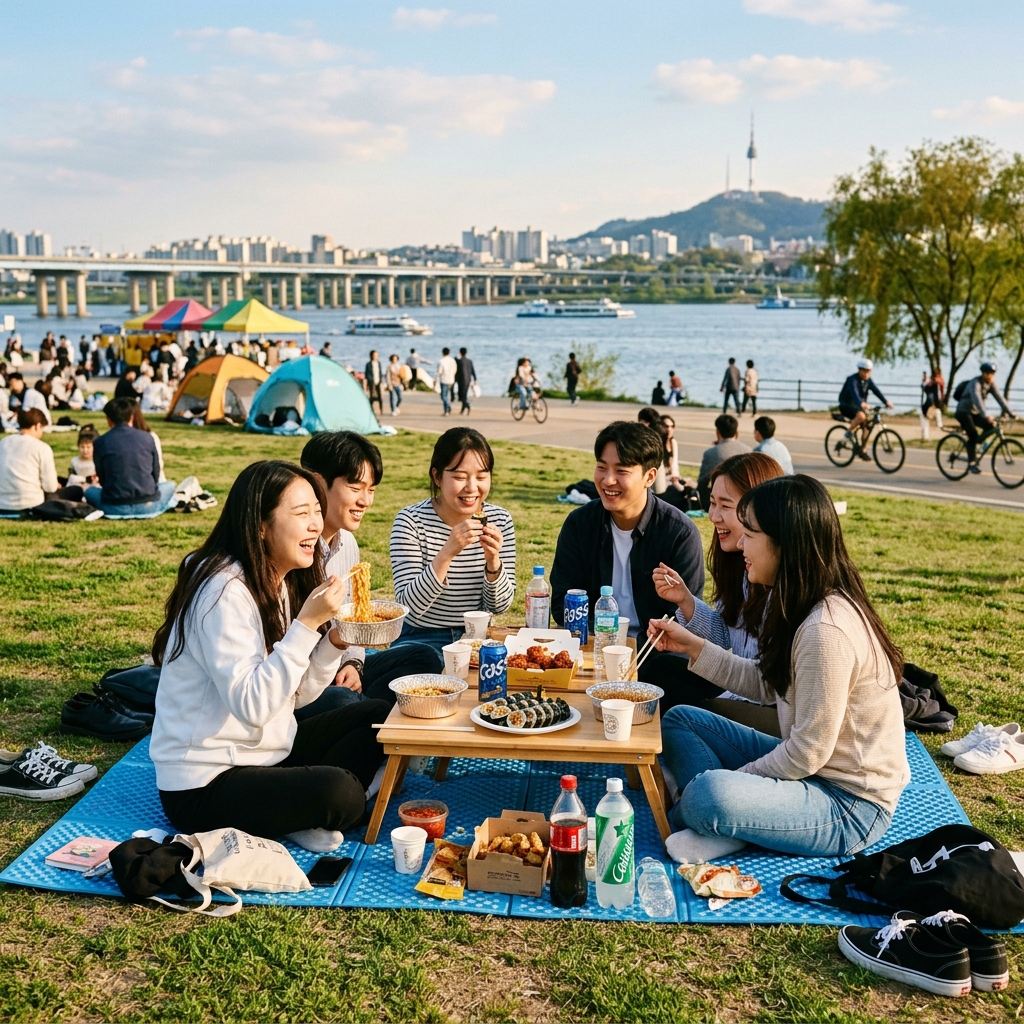
The Han River parks are beloved public sanctuaries. Because they are so heavily used, the city maintains strict rules to keep them pristine. Following these guidelines isn’t just about rules—it’s about maintaining the beauty of the city.
* **The Soup Rule:** Never pour leftover broth onto the grass or into the river. This is a major faux pas and can lead to fines. Every ramen station has a dedicated **liquid waste bin**. Pour your remains there first, then discard the foil bowl.
* **Recycling Precision:** Korea’s waste separation is rigorous. Rinse your foil container if possible. Separate the plastic wrap from the ramen packet and place it in the plastic recycling bin.
* **Mat and Tent Culture:** You don’t need to bring your own gear. Most subway exits leading to the parks have rental shops offering mats, low tables, and small tents. Remember: tents must be placed in designated “Tent Zones” and must have at least two sides open for safety and visibility.
* **Stay Informed:** For current events, fireworks schedules, or park closures, the Seoul Hangang Park Headquarters Website is the gold standard for official information.
At its core, Hangang Ramen is about the joy of simplicity. It’s the contrast of a high-tech city and a slow afternoon on the grass. Whether you’re sharing a bowl with friends or enjoying a moment of solitude, it is a sensory experience that defines the modern spirit of Seoul. So, grab your foil bowl, find a patch of green, and dive into this delicious urban tradition.
TRAVEL WRITER
✓ Verified
Updated 2026.05