Transit Card Korea Guide: How to Buy, Charge, and Use Tmoney and Climate Card for Seoul Subway and Buses (2026)
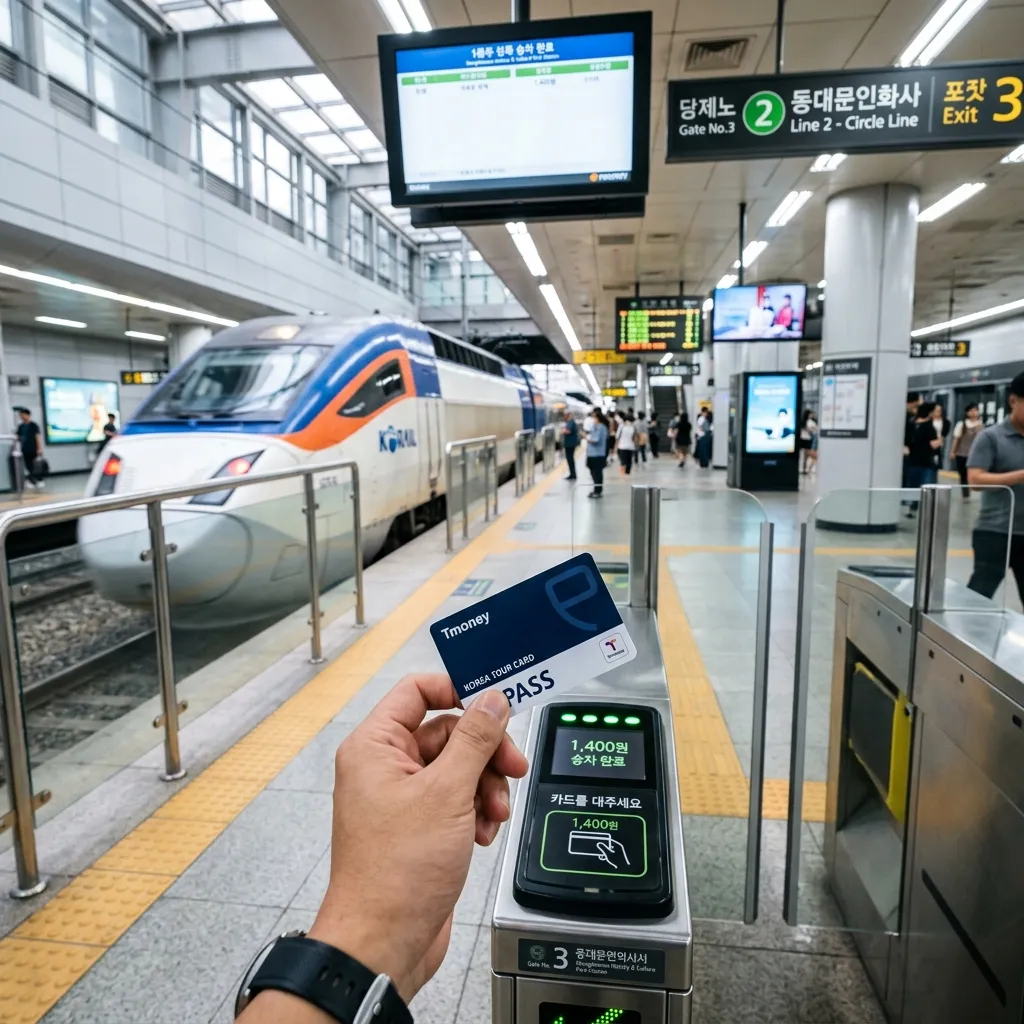
This comprehensive Transit Card Korea Guide for 2026 is your definitive resource for navigating Seoul’s efficient public transportation system. From the ubiquitous Tmoney card to the innovative Climate Card, mastering these transit solutions is key to an enjoyable and cost-effective experience in the vibrant capital. We’ll delve into everything you need to know about purchasing, topping up, and effectively utilizing these essential cards for seamless travel on the subway, buses, and even taxis, ensuring you explore Seoul like a seasoned local.
Understanding Korea’s Dynamic Transit Card Ecosystem
Seoul boasts one of the world’s most advanced and user-friendly public transportation networks. At the heart of this system are smart transit cards, designed to streamline your journey by eliminating the need for cash transactions and offering significant transfer discounts. While cash payment is still technically possible on buses, and single-use tickets are available for the subway, using a transit card is overwhelmingly more convenient, economical, and efficient for both residents and visitors alike. Understanding the nuances between the primary options – Tmoney and the newer Climate Card – will empower you to make the best choice for your travel needs.
The Ubiquitous Tmoney and Its Variants
The Tmoney card has long been the standard for public transport across South Korea. It is a rechargeable smart card that can be used on subways, buses, and even taxis in Seoul and many other major cities nationwide. Beyond transportation, Tmoney has expanded its utility, allowing payments at convenience stores, vending machines, and some designated cafes, transforming it into a versatile mini-wallet. Its widespread acceptance makes it an indispensable tool for anyone spending more than a day or two exploring the country.
In addition to the physical Tmoney card, mobile versions have gained immense popularity. Mobile Tmoney applications, available on both Android and iOS devices, allow users to simply tap their smartphones for payment, often linking directly to Korean bank accounts or international payment methods. While convenient, tourists might find setting up mobile Tmoney more challenging without a local phone number or bank account. Nevertheless, the traditional physical card remains the most straightforward option for most international visitors.
Introducing the Climate Card (기후동행카드): Seoul’s Unlimited Pass for a Greener Future
Launched with great success and expanding its scope into 2026, the Climate Card (기후동행카드) is Seoul Metropolitan Government’s initiative to promote public transport usage, reduce carbon emissions, and ease commuting costs for its citizens. It functions as an unlimited public transport pass for a fixed monthly fee, offering unrestricted access to Seoul subway lines (excluding Shinbundang Line), Seoul city buses, and even the Ttareungyi public bicycle rental service. This card is particularly attractive for those planning extensive travel within Seoul over a period of 30 days, providing exceptional value and convenience.
For tourists, the Climate Card presents an intriguing option, especially for longer stays within the capital. While initially designed for local commuters, its benefits can extend to visitors who intend to use public transport heavily for sightseeing. It represents a significant shift in Seoul’s transit policy, emphasizing sustainability alongside accessibility.
Tmoney Card: Your Essential Travel Companion
The Tmoney card is undeniably the most fundamental tool for navigating South Korea’s public transport system. It’s not just a payment method; it’s your gateway to convenience and cost savings through integrated transfer discounts. Familiarizing yourself with its features is paramount for any traveler.
Types of Tmoney Cards
- Standard Tmoney Card: The most common physical card, available at subway stations and convenience stores.
- Mobile Tmoney: An app-based solution for smartphones. Requires NFC-enabled phones and typically a local Korean number/bank for full functionality, though some versions are now supporting international credit cards more readily.
- Prepaid vs. Postpaid: Most tourist-friendly Tmoney cards are prepaid, meaning you load money onto them before use.
- Special Edition Cards: Often featuring popular K-pop idols, characters, or tourist attractions, these function identically to standard cards but make for great souvenirs.
Where to Buy Your Tmoney Card
Purchasing a Tmoney card is incredibly simple, with multiple convenient locations available throughout your journey. The card itself usually costs between 2,500 to 5,000 KRW, which is a one-time purchase fee for the physical card. This fee does not include any transit fare balance, which must be charged separately.
-
Incheon International Airport (ICN) or Gimpo International Airport (GMP)
Upon arrival, look for convenience stores like GS25, CU, 7-Eleven, or Emart24 located within the arrival halls or near the airport railway stations. You can purchase a Tmoney card directly from the counter staff. They will also be able to help you charge it immediately.
-
Subway Stations
Every subway station in Seoul and major cities has Tmoney vending/charging machines, often with English language options. You can also purchase a card from the service desk if available (usually marked with a “Tmoney” sign or information counter). Look for machines labeled “Tmoney Card Sales & Reload” or similar.
-
Convenience Stores Nationwide
Across South Korea, nearly all convenience stores (GS25, CU, 7-Eleven, Emart24, Ministop, Storyway, etc.) sell Tmoney cards. Just ask the cashier for a “Tmoney card” (티머니 카드, tee-muh-nee kah-duh). You can then charge it right at the same counter.
How to Charge (Top Up) Your Tmoney Card
Keeping your Tmoney card sufficiently charged is crucial for uninterrupted travel. It’s recommended to maintain a minimum balance of at least 2,000-3,000 KRW to avoid any inconvenience during peak travel times. Charging methods are just as accessible as purchasing locations:
- Subway Station Machines: Automated machines at every subway station allow you to charge your Tmoney card. Select the Tmoney option, place your card on the designated pad, choose your desired top-up amount (e.g., 5,000 KRW, 10,000 KRW, 20,000 KRW), and insert cash (only bills, usually 1,000, 5,000, 10,000, 50,000 KRW denominations accepted; some machines take coins).
- Convenience Stores: Hand your Tmoney card and cash to the cashier at any major convenience store. Inform them you want to “charge Tmoney” (티머니 충전, tee-muh-nee choong-jeon) and specify the amount.
- Bank ATMs: Some ATMs (particularly those from Shinhan Bank, Woori Bank, Hana Bank, KB Kookmin Bank) offer Tmoney charging services. This is generally more complex for international visitors due to language barriers and account requirements.
- Mobile Tmoney (for Mobile Tmoney users): If you are using the Mobile Tmoney app, you can top it up directly through the app using linked bank accounts or credit/debit cards (some international cards are supported, check compatibility).
Always remember to retrieve your card after charging! The process is usually quick, but a moment of distraction can lead to leaving your card behind.
Using Your Tmoney Card on Subway and Buses
Using your Tmoney card is incredibly intuitive and consistent across all forms of public transport:
- Subway: At the subway gate, tap your Tmoney card on the sensor (usually marked with a Tmoney logo or an illuminated display) when entering and exiting. The screen will show your fare deducted and remaining balance. Failing to tap out correctly will result in the maximum fare being charged on your next entry.
- Bus: Tap your Tmoney card on the sensor near the driver when entering the bus. Tap it again on the sensor located near the rear door when exiting. Tapping out is crucial for transfer discounts. For multiple riders, inform the driver how many people are traveling before tapping (e.g., “두 명입니다,” meaning “two people”).
- Taxi: Many taxis in Korea accept Tmoney. Just inform the driver you’ll be paying with Tmoney at the end of your ride, and they will present a card reader for you to tap.
Transfer Benefits: Maximizing Your Savings
One of the greatest advantages of Tmoney is the integrated transfer discount system. When transferring between subway lines or between a subway and a bus (or vice-versa) within a specific timeframe (usually 30 minutes, or 60 minutes between 9 PM and 7 AM), you only pay for the longest leg of your journey, plus a small additional fee if you exceed the base distance. This means multiple transfers often cost significantly less than individual cash fares for each leg. Always remember to tap out when exiting any mode of transport to register your transfer and qualify for the discount.
Checking Your Tmoney Balance and Refunds
You can check your Tmoney balance at any subway station machine, convenience store, or through the Mobile Tmoney app. If you have remaining balance at the end of your trip, you can get a refund for amounts under 50,000 KRW at convenience stores (minus a small service fee of 500 KRW). For balances over 50,000 KRW or for damaged cards, you’ll need to visit a Tmoney service center (usually found at major subway stations) or designated refund locations, requiring identification.
The Climate Card: Unlimited Rides in Seoul
The Climate Card, a flagship policy of the Seoul Metropolitan Government, offers a compelling alternative for those planning extensive travel within Seoul. As of 2026, its features are even more refined, aiming to become an indispensable part of urban mobility.
What is the Climate Card?
The Climate Card is a monthly pass offering unlimited rides on specific public transport services within Seoul. It’s designed to encourage residents and visitors to opt for eco-friendly public transport options, thereby reducing traffic congestion and carbon footprint. For a single fixed fee, you gain access to a vast network, making budgeting for transport incredibly straightforward.
- Validity: Typically a 30-day period from the date of first use.
- Cost (2026 estimate): While prices can adjust, expect the standard pass to be around 62,000 KRW for subway and city buses, with an option including Ttareungyi (public bikes) for approximately 65,000 KRW.
- Coverage:
- Seoul Subway Lines (1-9, Gyeongui-Jungang, Gyeongchun, Suin-Bundang, Ui-Sinseol, Sillim Line)
- Seoul City Buses (blue, green, yellow, red, nighttime buses)
- Ttareungyi (Seoul’s public bicycle sharing service) – if the bike option is purchased.
- Exclusions: Shinbundang Line, intercity buses, airport buses, and taxis are NOT covered by the Climate Card. It is primarily for use within Seoul city limits.
Where and How to Buy the Climate Card
The Climate Card can be purchased in two main forms: a physical card or a mobile card. The physical card is generally easier for tourists who may not have Korean phone numbers or local bank accounts.
- Physical Card:
- Purchase the physical card itself (usually 3,000 KRW) from subway station customer service centers (lines 1-8) or designated convenience stores within subway stations.
- Register the card via the Tmoney website or app to track usage and for potential refunds in specific cases.
- Charge the card at subway station machines or convenience stores. Select the Climate Card option and choose your desired 30-day start date. Payment is generally cash-only for physical card top-ups.
- Mobile Card:
Available through dedicated mobile applications (e.g., Mobile Tmoney or Climate Card specific apps). This requires an Android phone with NFC capabilities and often a Korean phone number or specific bank account setup. While convenient for long-term residents, it may be less feasible for short-term visitors.
It’s advisable for tourists to opt for the physical card and purchase it at a major subway station where staff might be able to assist if needed.
Using Your Climate Card
Similar to Tmoney, using the Climate Card is straightforward:
- Subway: Tap the card on the sensor when entering and exiting the subway gates. There will be no fare deducted, but the system registers your entry/exit.
- Bus: Tap the card on the sensor when entering the bus. Unlike Tmoney, you generally do not need to tap out when exiting a bus with the Climate Card, as it offers unlimited rides regardless of distance within Seoul. However, it’s a good habit to tap out to register your journey for data collection purposes, though it won’t affect your fare.
- Ttareungyi (Public Bikes): If you purchased the Climate Card with the Ttareungyi option, you can link your Climate Card to the Ttareungyi app and rent bicycles seamlessly.
Is the Climate Card Right for You? A Quick Diagnostic
Considering the Climate Card for Your Seoul Trip?
- Are you staying in Seoul for approximately 30 days?
- Do you plan to use the subway and city buses extensively (3-4+ times daily)?
- Will most of your travel be confined to Seoul city limits (no intercity travel, no Shinbundang Line)?
- Do you prefer a fixed transportation budget with unlimited rides?
- Are you interested in using Seoul’s public bicycle sharing service (Ttareungyi)?
If you answered “Yes” to most of these questions, the Climate Card could offer significant savings and convenience. If your trip is shorter, involves frequent travel outside Seoul, or includes Shinbundang Line, a Tmoney card might be more suitable.
Comparing Tmoney and Climate Card: Which One to Choose?
Deciding between a Tmoney card and a Climate Card depends entirely on your travel itinerary, duration, and habits. Both offer immense convenience over cash payments, but their specific benefits cater to different types of travelers. Here’s a comparative overview to help you make an informed decision for your 2026 trip.
| Feature | Tmoney Card | Climate Card |
|---|---|---|
| Purpose | Pay-as-you-go, rechargeable balance | Unlimited rides for a fixed period (30 days) |
| Cost (Card Purchase) | 2,500 – 5,000 KRW (one-time for physical card) | ~3,000 KRW (one-time for physical card) |
| Usage Cost | Fare per ride (approx. 1,250-1,550 KRW for subway base fare) | ~62,000 KRW (subway + bus) or ~65,000 KRW (subway + bus + Ttareungyi) for 30 days |
| Coverage (Seoul) | All Seoul Subway, all Seoul Buses, most Taxis, Gyeonggi/Incheon transport | Most Seoul Subway Lines (excluding Shinbundang Line), Seoul City Buses, Ttareungyi (optional) |
| Coverage (Beyond Seoul) | Accepted in most major cities (Busan, Jeju, Daegu, etc.) for local transport | Exclusively for use within Seoul City limits; not valid for intercity travel or outside Seoul. |
| Transfer Benefits | Integrated transfer discounts between subway/bus within 30-60 mins (requires tapping out) | N/A (unlimited rides mean no separate transfer logic needed, though tapping out on bus is not mandatory for fare calculation but recommended) |
| Refunds | Remaining balance refundable at convenience stores (under 50k KRW) or service centers (over 50k KRW), minus fee. | Limited refunds only for specific cases (e.g., system failure); generally no refunds for unused days. |
| Convenience Store Payment | Yes (many convenience stores, vending machines) | No (solely for public transport) |
| Ideal For | Short-term visitors, light users, multi-city travel, those needing taxi payments or convenience store payments. | Long-term visitors (15+ days), heavy public transport users within Seoul, budget-conscious travelers focusing solely on Seoul. |
In summary, if your trip to Korea involves exploring various cities beyond Seoul, or if your stay in Seoul is short and your public transport usage minimal, the Tmoney card is the clear winner due to its flexibility and nationwide acceptance. However, for a deep dive into Seoul over an extended period, the Climate Card offers unparalleled value and peace of mind with its fixed, unlimited access.
Practical Tips for Seamless Travel with Transit Cards
Even with the most advanced systems, a few practical tips can make your public transport experience in Korea even smoother:
- Always Tap In and Out: This is critical for Tmoney to ensure correct fare calculation and transfer discounts. For the Climate Card, while tapping out on buses isn’t strictly necessary for fare, it’s good practice for system data collection. For subways, it’s always mandatory.
- Maintain a Minimum Balance: For Tmoney, ensure you always have at least 1,500 – 2,000 KRW on your card. The system may prevent entry if your balance is too low, even if the actual fare would be less.
- Check Your Balance Regularly: Use subway station machines or ask at convenience stores. Mobile Tmoney apps also provide real-time balance checks.
- Don’t Share Your Card for Transfers: Transfer benefits are applied per individual. While you can tap for multiple people at entry (by telling the driver), transfer discounts won’t apply to subsequent riders on the same card. Each person should have their own card.
- Mind the Time for Transfers: Transfer discounts for Tmoney are typically valid within 30 minutes of tapping out, or 60 minutes during late-night hours (9 PM – 7 AM). Plan your transfers accordingly.
- Lost or Stolen Cards: Unfortunately, physical Tmoney cards are bearer instruments, meaning if you lose it, the balance is generally unrecoverable unless it was a registered card (which is mostly for local residents). Climate Cards also have limited recovery options. Keep them safe!
- Using Mobile Tmoney for Tourists: While the physical card is easiest, if you have a local SIM and an NFC-enabled Android phone, consider setting up Mobile Tmoney. Some versions now support international credit cards for charging, offering extra convenience.
Frequently Asked Questions About Korean Transit Cards (Q&A)
Your Transit Card Queries Answered
Can I use one Tmoney card for multiple people?
For buses, you can inform the driver how many people are traveling, then tap your Tmoney card for each person. However, only the first tap will receive transfer benefits. For subway, each person needs their own card to pass through the gates and receive proper fare calculations/transfer benefits.
What if I forget to tap out on the subway or bus with my Tmoney card?
If you forget to tap out on the subway, the system will charge you the maximum fare for that line on your next tap-in. For buses, forgetting to tap out means you won’t receive any transfer discounts on your next ride, and a higher fare might be charged on the subsequent trip. Always remember to tap out!
Can I get a refund for my Tmoney card’s remaining balance?
Yes, you can. For balances under 50,000 KRW, most convenience stores can process a refund (a 500 KRW service fee applies). For balances over 50,000 KRW or for damaged cards, you’ll need to visit a Tmoney service center at major subway stations. The initial card purchase fee is typically non-refundable.
Is the Climate Card worth it for a one-week trip to Seoul?
Generally, no. The Climate Card is valid for a 30-day period. For a one-week trip, you would need to use public transport an exceptional amount (multiple times a day, every day) to break even with the ~62,000 KRW cost. A Tmoney card, paying per ride, is usually more cost-effective for shorter stays or lighter usage.
Can I use the Climate Card to travel to Incheon International Airport?
No. The Climate Card is specifically for Seoul city public transport. The Airport Railroad Express (AREX) and airport limousine buses are not covered. You would need a Tmoney card or a separate ticket for airport travel.
TRAVEL WRITER
✓ Verified
Updated 2026.05