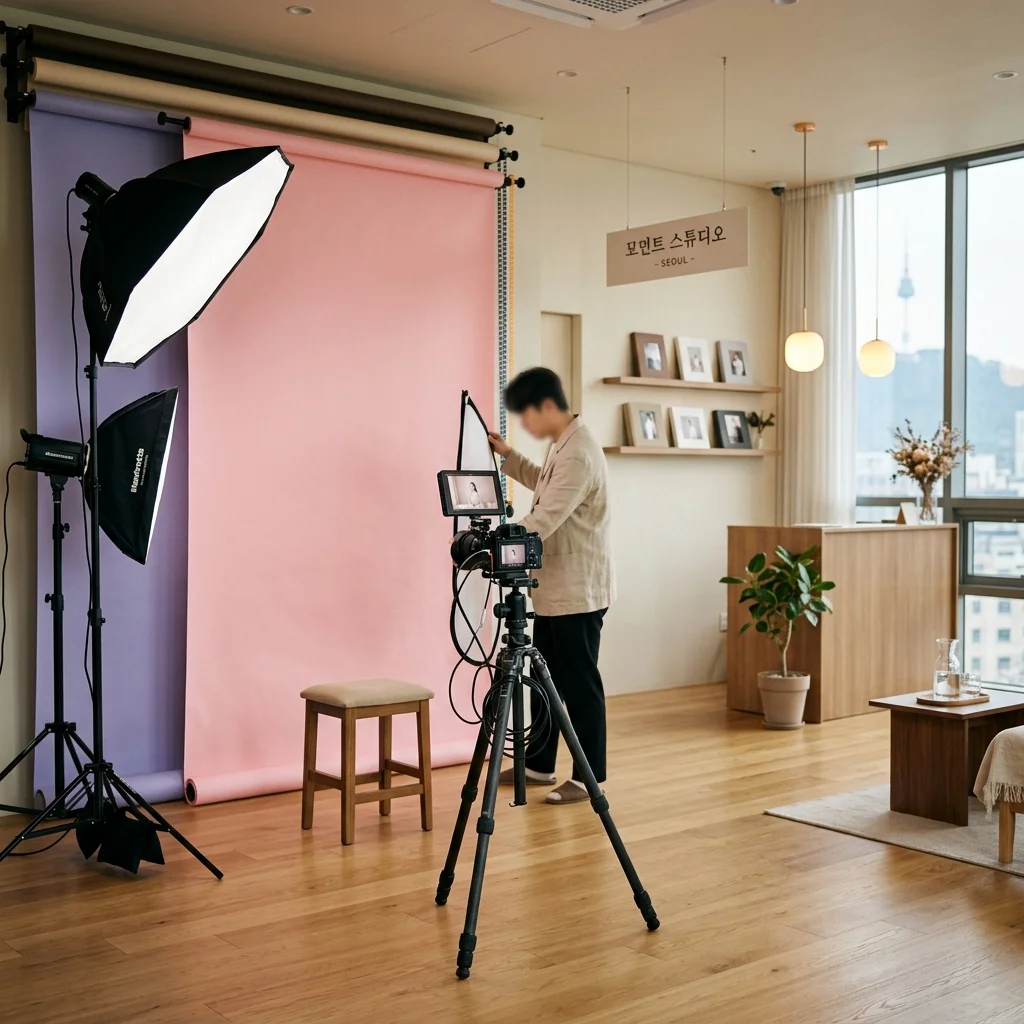
Walking through the neon-lit streets of Gangnam or the artistic alleys of Seongsu-dong, you’ll notice a recurring theme in the social media feeds of locals and tourists alike: portraits that look impossibly polished yet strangely natural. This isn’t just the result of a good filter. It is the product of a highly specialized industry. Visiting a korean photo studio seoul has evolved from a simple errand into a curated cultural experience, blending high-end photography with a meticulous approach to personal branding.
In South Korea, the concept of the “life shot” (인생샷) carries significant weight. It is the one photograph that captures you at your absolute peak. While Western portraiture often emphasizes raw authenticity or dramatic lighting, the Seoul aesthetic focuses on “refined harmony.” It’s about enhancing your existing features to create a version of yourself that feels elevated. For the uninitiated, however, entering this world can be overwhelming. Between the complex booking apps and the specific aesthetic codes, there is a steep learning curve to getting that iconic look.
The Art of Visual Harmony: Personal Color and the 1:1 Edit
The secret behind those luminous, glowing portraits isn’t just the camera; it’s the science of color. Most premium studios in Seoul now integrate “Personal Color Analysis” into their workflow. They don’t just throw you in front of a white wall. Instead, photographers analyze whether your skin has warm, cool, or neutral undertones. This determines the backdrop color. A “cool summer” palette might be paired with a soft lavender or muted blue, while a “warm autumn” profile looks best against cream, terracotta, or deep olive tones.
This color coordination prevents the skin from looking washed out or overly sallow under the intense studio strobes. It creates a seamless blend between the subject and the environment, making the image feel three-dimensional and expensive.
But the real magic happens after the shutter clicks. The “Korean Retouching System” is legendary for a reason. Unlike the automated smoothing of an app, you are typically invited to a 1:1 customized editing session. You sit beside the retoucher, watching the screen as they sculpt the image in real-time. This is a collaborative process. You might ask to subtly adjust a stray hair, refine the symmetry of your smile, or soften a specific shadow on the jawline.
The goal isn’t to create a digital mask. A skilled retoucher knows exactly how much to tweak to maintain your identity while removing the temporary flaws—like a breakout or a tired eye—that don’t define your true appearance. It is a masterclass in digital subtlety.
Navigating the Reservation War: Booking Hacks for Visitors
Securing a spot at a viral studio is often harder than getting a K-pop concert ticket. Many of the most sought-after venues, such as Sihyunhada or the boutique studios in Hongdae, operate on a “drop” system. Reservation slots open on specific dates and times—often midnight KST on the 1st or 15th of the month—and are snapped up within seconds. If you rely on a standard search, you’ll likely find them fully booked for weeks.
For international travelers, the biggest hurdle is the “Naver” ecosystem. Most local studios use Naver Booking, which frequently requires a verified Korean phone number. To bypass this, look toward global-friendly intermediaries. Platforms like Klook, Creatrip, or CatchTable Global have carved out a niche by securing blocks of appointments specifically for tourists, offering English interfaces and international payment gateways.
If those are full, don’t give up. Instagram is the currency of the Seoul photo scene. Sending a polite, concise DM in English (or basic Korean) to the studio can sometimes reveal last-minute cancellations. Pro tip: be flexible with your timing. Mid-week mornings are significantly easier to book than Saturday afternoons. Aim to reserve your session at least 4 to 6 weeks before your flight to avoid the stress of a “sold out” screen.
Choosing Your Vibe: Studio Type Comparison
| Studio Type | Average Cost (KRW) | Editing Method | Best Suited For |
|---|---|---|---|
| Color ID Portrait | 50,000 – 80,000 | 1:1 Live Retouching | Official IDs, Social Media, Travel Souvenirs |
| Self-Studio (Self-Shot) | 30,000 – 50,000 | Self-Controlled (Remote) | Couples, Friends, Natural Candids |
| High-End Editorial | 150,000 – 300,000 | Full Professional Agency Edit | Portfolios, Acting Headshots, Premium Prints |
The Pre-Shoot Ritual: Wardrobe, Makeup, and Mindset
A great photo is 40% lighting, 30% editing, and 30% preparation. Turning up unprepared is the fastest way to end up with a photo you’ll want to hide. Start with your wardrobe. The golden rule in Seoul studios is “structured simplicity.” Avoid loud, geometric patterns or neon colors that compete with the background. Instead, lean into neutrals—beige, cream, charcoal, or navy. These colors act as a frame for your face rather than a distraction.
Pay close attention to the neckline. A high turtleneck can sometimes “shorten” the neck in a headshot, whereas a V-neck or an open collar creates a more elongated, elegant silhouette. Texture also matters; a crisp linen shirt or a soft knit sweater adds visual depth that a plain cotton t-shirt lacks.
When it comes to makeup, the studio lights are unforgiving. They amplify shine. While the “glass skin” look is trendy in daily life, it can look like oily skin under professional strobes. Opt for a semi-matte finish. Use a translucent setting powder on your T-zone to prevent hot spots of light from reflecting off your forehead or nose. If you’re wearing makeup, keep the colors cohesive with your chosen backdrop. A bold red lip against a soft pink background can sometimes feel jarring; aim for a harmonious color story.
Finally, manage your mindset. Many people freeze up when the camera starts clicking. Remember that the photographer is there to guide you. They will give you specific instructions on chin placement, shoulder angles, and gaze. Trust the process. The “stiff” feeling usually vanishes after the first ten shots, so use the beginning of the session as a warm-up.
Beyond the Aesthetic: Why the ‘Profile Photo’ Matters
To understand why color id photo korea services are so popular, one must understand the Korean approach to professional identity. In Seoul, a profile picture is not just for social media; it’s a professional asset. From corporate LinkedIn profiles to creative portfolios, the “ID photo” has evolved from a government requirement into a form of self-curation. It’s a way of signaling attention to detail and a commitment to a polished image.
This trend reflects a broader cultural shift toward “Personal Branding.” In a hyper-competitive society, the visual representation of oneself is treated with the same seriousness as a resume. By investing in a high-end studio session, individuals are essentially creating a visual calling card that radiates confidence and professionalism.
Creating a Lasting Memory
Investing in a professional session at a korean photo studio seoul is more than just a shopping trip for a pretty picture. It is an exploration of your own best angles and a taste of the city’s obsession with perfection and art. By blending the right wardrobe, a strategic booking approach, and an open dialogue with your retoucher, you transform a standard portrait into a piece of art.
Whether you need a stunning new profile picture for your career or a sentimental keepsake of your time in Korea, the experience is rewarding. Just remember to breathe, trust your photographer, and embrace the process of seeing yourself through a professional lens. Your “life shot” is waiting.
TRAVEL WRITER
✓ Verified
Updated 2026.05