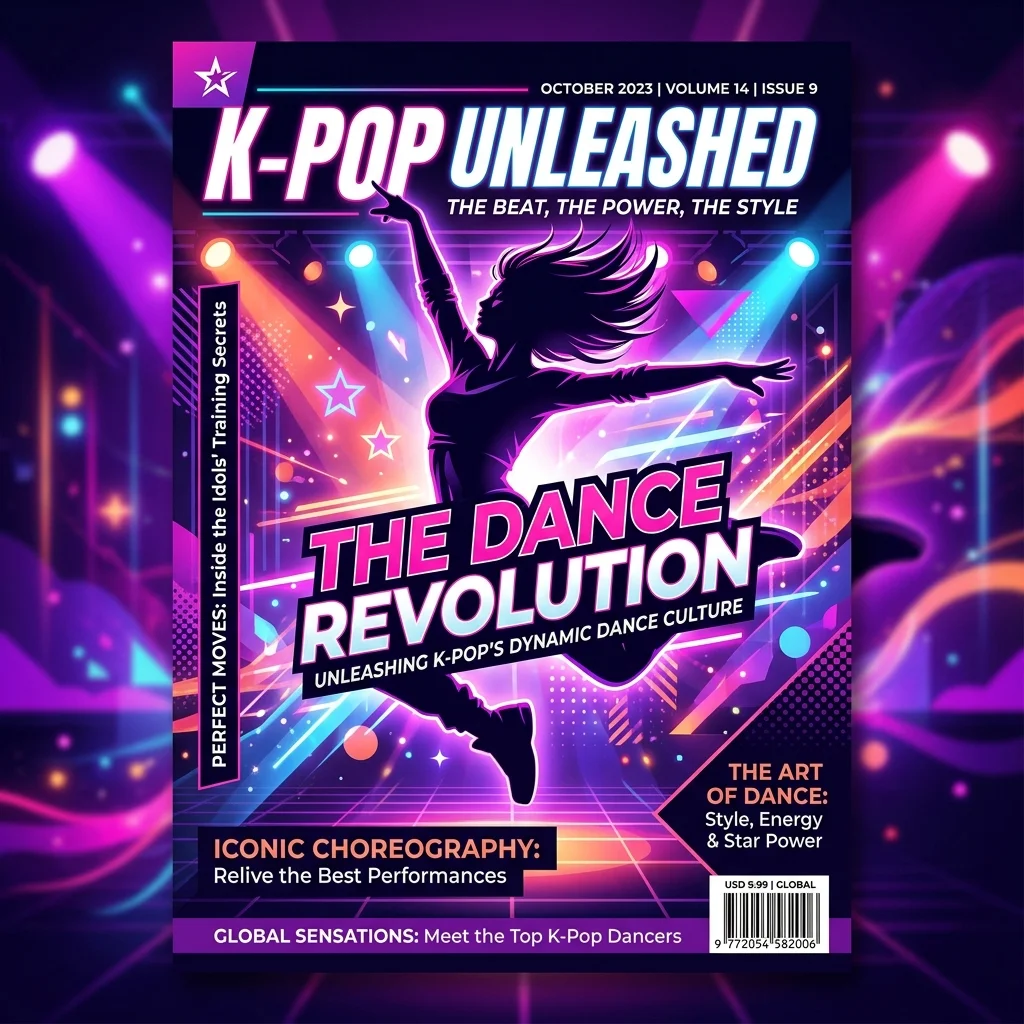
K-Pop Dance Academy Seoul is more than just a trend; it is a pilgrimage for those who see dance as a universal language. For years, the world has watched polished music videos from the comfort of a screen. Now, travelers are landing in Incheon with one goal: to step into those mirrored halls and experience the grueling, exhilarating precision of Korean choreography firsthand. Seoul is the only place where the line between “student” and “professional” blurs, as the same instructors who train global idols often lead the public classes. This is where the “K-pop polish” is manufactured, and for a few hours, you get to be part of that process.
The landscape of dance in Seoul has shifted to welcome the world. Gone are the days when you needed a local contact or a fluent grasp of Korean to enter a studio. Today, the industry has pivoted toward a “tourist-friendly” model. You’ll find intuitive English booking apps, instructors who can communicate through rhythm and basic English, and a culture of inclusivity that welcomes everyone from seasoned professionals to those who have never danced a step in their lives. Most studios operate on a drop-in basis, meaning you can treat your dance experience like a museum visit—pick a song, book a slot, and dive in without any long-term commitment. It is a high-energy way to break up a sightseeing itinerary and feel the pulse of the city’s youth culture.
01. Decoding the Soul of Seoul’s Dance Culture
To understand the Seoul dance scene, you have to understand the “Trainee System.” In South Korea, dance isn’t just a hobby; it’s a disciplined art form. This rigor trickles down into the public academies. When you walk into a studio, you aren’t just learning a series of steps; you are learning “line,” “texture,” and “energy”—the three pillars of K-pop performance. The atmosphere is electric. You’ll often find a mix of aspiring idols, university students, and international tourists all sweating through the same routine. It is a democratic space where the only thing that matters is your ability to catch the beat.
For the visitor, the beauty lies in the accessibility. The city has developed a sophisticated “drop-in” ecosystem. Rather than enrolling in a three-month course, you can curate your own experience. Want to learn a powerful hip-hop set on Monday and a graceful pop routine on Wednesday? It’s entirely possible. This flexibility allows you to align your dance classes with your other Seoul activities, perhaps spending the morning in Bukchon Hanok Village and the afternoon mastering a Blackpink chorus in Seongsu-dong.
However, be mindful of the cultural nuance regarding “perfection.” Korean instructors value precision. While they are encouraging, they may push you to sharpen a movement or fix your posture. Don’t be intimidated—this is part of the premium experience. It is this obsession with detail that makes K-pop choreography world-famous, and experiencing it firsthand is a lesson in discipline and passion.
02. The Big Three: Choosing Your Training Ground
Not every studio is created equal. Depending on whether you want a “viral” experience, an intense athletic challenge, or a gentle introduction, your choice of academy will change your entire trip. We have analyzed the most prominent hubs to help you decide where you fit in.
1Million Dance Studio
The undisputed titan of the industry. Located in the trendy Seongsu-dong area, it feels more like a creative campus than a school. They offer a seamless English app and a massive roster of celebrity choreographers. Ideal for those who want the “famous” experience. Class Fee: 28,000 ~ 30,000 KRW.
YGX Academy
If you crave “swag” and raw power, this is your spot. Situated in the youth-centric Mapo-gu/Hongdae area, YGX is the training arm of YG Entertainment. Expect heavy hip-hop influence and intense energy. It’s less about “pretty” and more about “impact.” Class Fee: 30,000 ~ 35,000 KRW.
Real Beat Studio
The sanctuary for the “dance-shy.” Located in Gangnam, this studio focuses on the viral side of K-pop—TikTok and Instagram challenges. The classes are smaller, the pace is slower, and the environment is incredibly supportive. Great for absolute beginners. Class Fee: 25,000 ~ 28,000 KRW.
The Expert’s Verdict
Go to 1Million for the prestige and variety. Choose YGX if you have a background in street dance. Pick Real Beat if you want to learn a 15-second viral clip without feeling overwhelmed.
03. The Investment: Breaking Down Time and Cost
A single class is a compact burst of activity. Most sessions last about 80 to 90 minutes. It’s a fast-paced environment where every minute is utilized. You don’t just “dance”; you warm up, break down the mechanics, repeat the sequence, and eventually film a final take. For most travelers, the cost is negligible compared to the memory created.
| Expense Item | Estimated Cost (KRW) | Detailed Breakdown & Description |
|---|---|---|
| Class Ticket | 30,000 KRW | Single entry fee for one drop-in class (80 minutes) |
| Transportation | 2,800 KRW | Round-trip subway fare using T-money inside Seoul |
| Hydration | 1,000 KRW | Bottle of water from convenience store (essential) |
| Sneaker Rental | 5,000 KRW | Rental of clean indoor sneakers (optional, if you do not bring own) |
| Cafe Recovery | 6,000 KRW | Post-class recovery beverage at local trendy Seongsu cafe |
| Total Budget | 44,800 KRW | Complete high-value cultural class experience under 50k Won |
Beyond the class fee, remember to budget for your “dance kit.” If you don’t have indoor sneakers, you can often find affordable pairs at nearby convenience stores or Daiso, though bringing your own is recommended for comfort. Also, consider the travel time; Seoul traffic is legendary, and arriving late to a dance class is generally frowned upon as it disrupts the flow of the choreography.
04. From Smartphone to Studio: The Booking Blueprint
Booking a class in Seoul is straightforward, but it requires timing. Popular choreographers can have their slots filled within minutes of the schedule being released. To avoid disappointment, follow this logistical roadmap.
The Friday Ritual
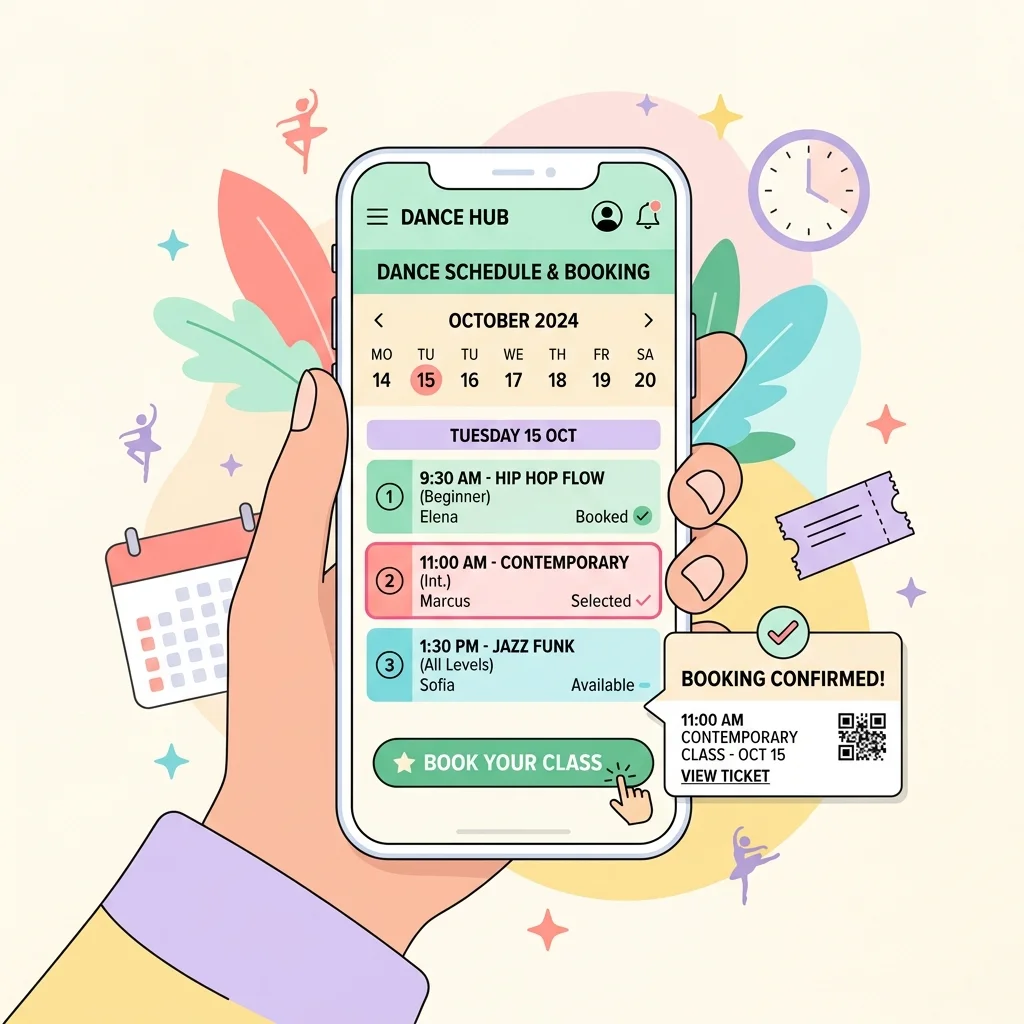
Most major studios release their weekly rosters on Friday. Set a reminder. Check the website or app to see which songs are being taught. If you see a “Master” class for a song you love, be ready to click “Book” the moment it goes live.
Payment and Digital Tickets
Create your account and pay using an international credit card (Visa/Mastercard). Once payment is confirmed, you’ll receive a QR code or barcode. Keep this accessible on your phone; this is your golden ticket into the studio. For the full experience, visit 1Million’s official site to see their current lineup.
The “Indoor Shoe” Mandate
This is the most critical rule in Korean studios. You cannot wear the shoes you walked on the street into the dance hall. This is for hygiene and floor preservation. Bring a clean pair of indoor-only sneakers. If you forget, you may be asked to leave or find yourself dancing in socks, which is a recipe for slipping.
The Pre-Game Arrival
Arrive 30 minutes early. You’ll need time to navigate the lobby, scan your code, and swap your shoes. Most studios provide lockers for your bags. Getting settled early allows you to shake off the travel stress and get into the right headspace for the music.
05. Surviving Your First Class: A Beginner’s Survival Kit
Walking into a room with 40 people who seem to know exactly what they’re doing can be daunting. The key is to manage your expectations and your positioning. You aren’t there to be a professional; you’re there to experience the energy.
Mastering the Level System
Ignore the temptation to join an “Advanced” class just because you love the song. Look for labels like “Level 0,” “Basic,” or “Beginner.” These classes prioritize the “how” over the “what,” breaking down the rhythm before adding the complex arm movements. It is far more rewarding to nail a basic routine than to struggle through a professional one.
The Strategic Sweet Spot
Positioning is everything. The front row is high-pressure—you are essentially the instructor’s primary focus. The back row is frustrating—you’ll spend half the class staring at the back of someone’s head. Aim for the middle. You can see the instructor clearly, observe the students in front of you for cues, and still have a clear view of yourself in the mirror.
Bottom-Up Learning Theory
K-pop dance is a full-body coordination challenge. If you feel lost, stop trying to do everything. Focus entirely on the feet first. Once your lower body is locked into the rhythm, the arms will follow naturally. It’s much easier to add “flavor” to a solid foundation than to try and build both simultaneously while the music is blasting.
06. Common Hurdles: Answers for the International Dancer
Before you pack your bags and sneakers, there are a few lingering doubts most travelers have. We’ve addressed the most frequent concerns here.
Dance is a visual medium. While the detailed explanations are in Korean, the “counts” (1, 2, 3, 4) are universal. Instructors use exaggerated body language and demonstrate the move multiple times from both the front and back. You’ll find that you’re mirroring the people around you as much as the teacher, and that’s exactly how it’s meant to work.
Absolutely. These studios thrive on diversity. Their “Level 0” classes are specifically curated for people who have never stepped foot in a studio. The goal is enjoyment and basic rhythm, not perfection. You’ll be surprised how many other people in the room are in the exact same boat as you.
Not at all. You will see a fascinating cross-section of society—from 14-year-old aspiring trainees to 50-year-old enthusiasts. The K-pop dance community in Seoul is remarkably inclusive, and as long as you have the energy and the indoor shoes, you are welcome.
Studios are protective of their choreographers’ intellectual property. Filming during the “learning” phase is usually prohibited. However, at the end of the session, there is almost always a designated “performance run” where the music is played in full and everyone is encouraged to record the group’s progress. This is your moment to capture the memory.
Final Thoughts: More Than Just a Dance Class
Stepping into a K-Pop Dance Academy in Seoul is a visceral way to engage with the city. It strips away the tourist facade and puts you in a room where hard work, creativity, and pop culture collide. Whether you leave with a perfectly memorized routine or just a few funny stories about your lack of coordination, the experience is about the effort. It is a high-octane highlight of any trip to South Korea, offering a rare glimpse into the dedication that fuels the global Hallyu wave. Just remember your indoor shoes, book your slot early, and most importantly, let go of the embarrassment and dance.
Distilling complex travel logistics and deep cultural trends into actionable, premium guides for the modern traveler in South Korea.
TRAVEL WRITER
✓ Verified
Updated 2026.05