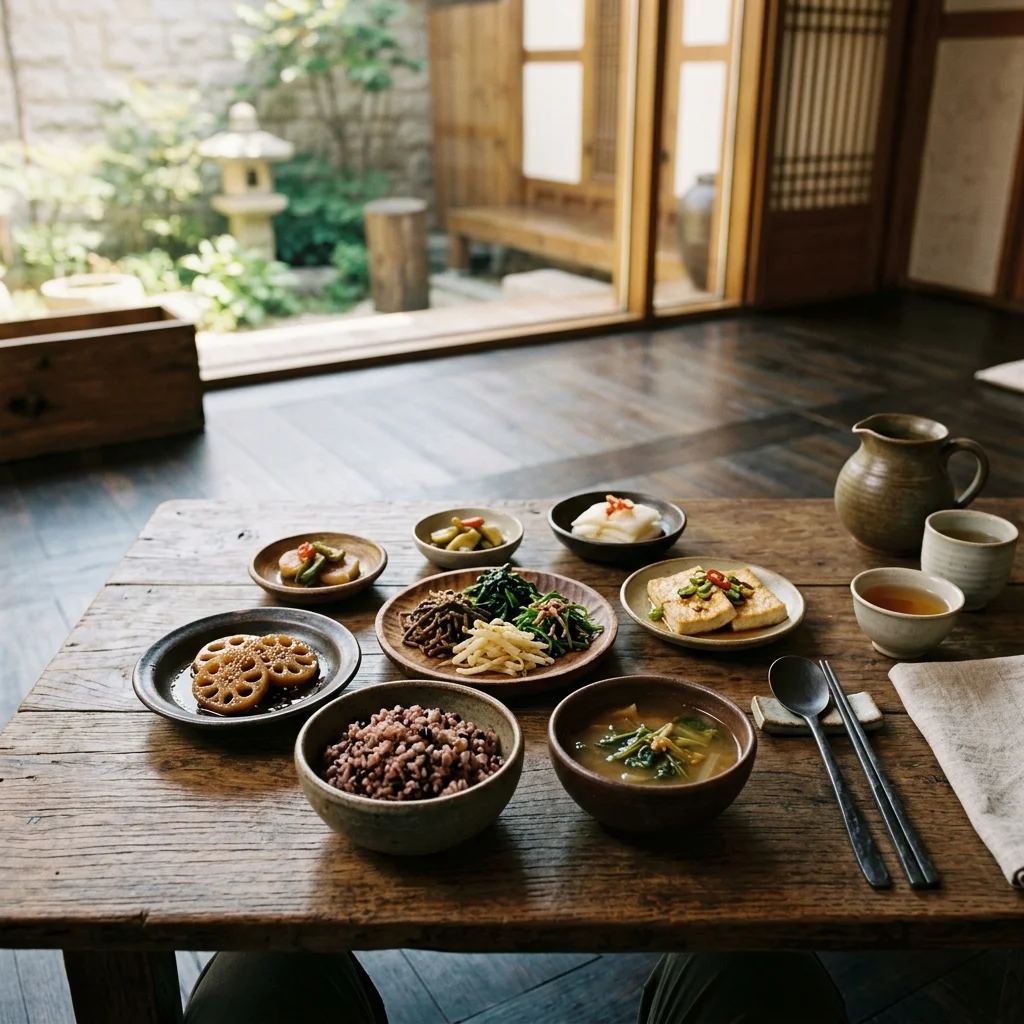
Seoul is a city of jarring contrasts. One moment you are surrounded by the neon hum of Gangnam or the frantic pace of Myeongdong; the next, you step through a heavy wooden gate and find yourself in a world where time seems to hold its breath. For those seeking an authentic connection to the city’s soul, exploring korean temple food seoul offers a gateway to a tradition that transcends mere dieting. It is a culinary practice rooted in a thousand years of Buddhist spirituality, where the act of eating becomes a form of meditation.
Unlike standard veganism, which is often a modern health or ethical choice, temple food is a spiritual discipline. It strips away the noise of artificial seasonings to reveal the raw, honest voice of the earth. Finding these experiences in Seoul has become significantly easier for international visitors, with several world-class establishments bridging the gap between monastic austerity and fine dining. Whether you are a lifelong vegan or a curious foodie, these sanctuary-like spaces provide a rare opportunity to slow down and reset your internal clock.
2. Understanding Oshinchae: The Forbidden Five
3. Temple Food vs. Everyday Korean Fare
4. Where to Eat: Seoul’s Best Temple Food Spots
5. Is This Culinary Path Right for You?
6. A Walkthrough of a Traditional Temple Meal
7. Common Questions & Insights (FAQ)
1. The Spiritual Essence of Buddhist Cuisine
At its heart, Korean Buddhist cuisine is not about restriction, but about awareness. Every gesture—from the way a root is scrubbed to the precision of a knife cut—is performed with a sense of gratitude. In the monastic tradition, the kitchen is considered a place of practice. The goal is to minimize the “ego” of the chef, allowing the natural energy of the ingredient to speak for itself without the interference of heavy oils or processed sugars.
Seasonality is the invisible hand that guides the menu. You will not find strawberries in December or root vegetables in July. Instead, temple chefs follow the rhythm of the Korean peninsula, utilizing wild mountain greens in the spring and fermented preserves in the depths of winter. This alignment with nature is believed to balance the body’s internal energy, ensuring that what we consume is in perfect harmony with the environment around us.
2. Understanding Oshinchae: The Forbidden Five
If you have tasted traditional Korean food, you know that garlic and scallions are the backbone of almost every dish. However, step into a temple, and these ingredients vanish. This is due to the restriction of Oshinchae—the five pungent herbs. These include green onions, garlic, chives, wild chives, and onions.
Why the ban? In Buddhist teaching, these specific plants are thought to stir up desire and anger. They are believed to create “heat” in the body and mind, which acts as a distraction during deep meditation. By removing these stimulants, the practitioner maintains a state of calm, clear-headedness. For the diner, this results in a flavor profile that is remarkably clean and understated, devoid of the aggressive bite usually associated with Korean cuisine.
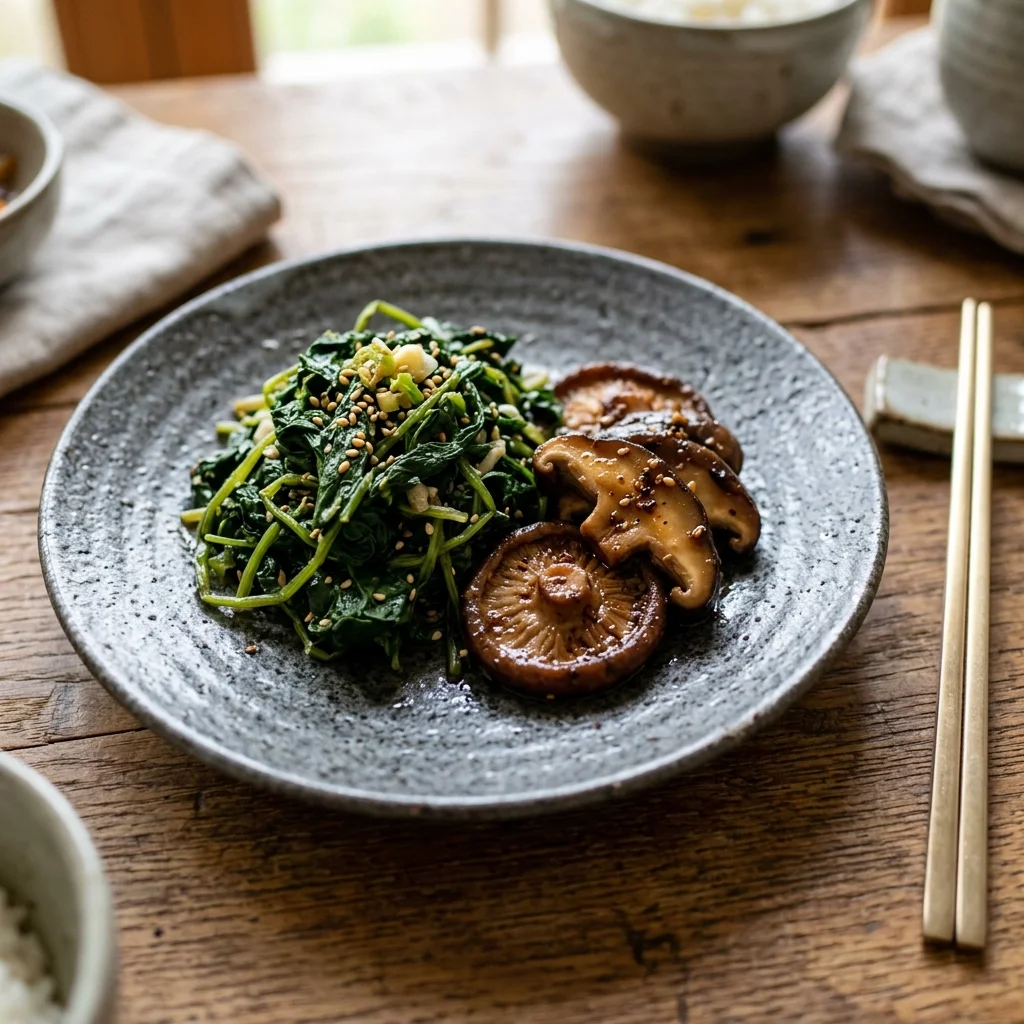
To compensate for the lack of garlic, temple chefs master the art of natural umami. They rely on aged soy sauces, fermented soybean paste (doenjang) that has matured for years, and a variety of dried mushrooms and kelp. The result is a deep, savory richness that doesn’t overwhelm the palate but lingers gently, leaving the stomach feeling light and the mind refreshed.
3. Temple Food vs. Everyday Korean Fare
While both share a love for vegetables and fermentation, the approach is fundamentally different. General Korean food often emphasizes bold, punchy flavors and high-contrast spice levels. Temple food, conversely, seeks a middle path of subtlety and balance.
| Comparison Metric | General Korean Cuisine | Korean Temple Food |
|---|---|---|
| Primary Proteins | Beef, pork, chicken, seafood | Tofu, mushrooms, seeds, nuts |
| Seasoning Base | Garlic, green onions, red pepper paste | Fermented soy sauce, soybean paste, kelp |
| Forbidden Herbs (Oshinchae) | Widely used in almost all dishes | Strictly prohibited (Garlic, onions, etc.) |
| Flavor Profile | Spicy, salty, bold, and savory | Mild, earthy, clean, and subtle |
| Culinary Goal | Culinary enjoyment and sensory satisfaction | Mindful nutrition and spiritual meditation |
| Digestion Impact | Can be heavy or spicy for some | Highly digestible and soothing |
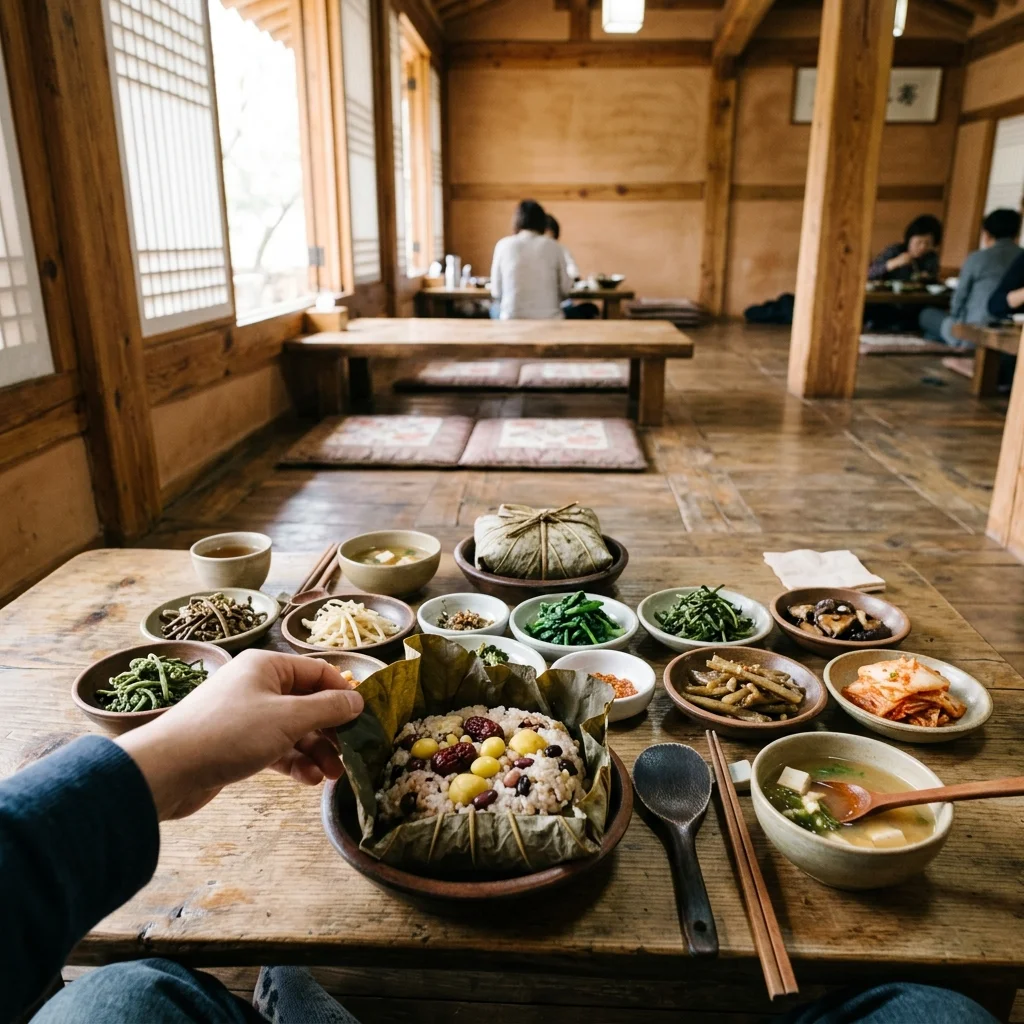
4. Where to Eat: Seoul’s Best Temple Food Spots
Seoul offers a spectrum of experiences, from the rigorous formality of Michelin-starred dining to the cozy atmosphere of neighborhood organic cafes. Each venue interprets the temple tradition slightly differently.
- Balwoo Gongyang: This is perhaps the most prestigious option. Operated by the Jogye Order of Korean Buddhism in Insa-dong, it is a masterclass in precision. The multi-course meals are designed to mirror the monastic experience, focusing on purity and the strict adherence to traditional recipes. It is an investment in both taste and culture.
- Dooreyoo: Tucked away in the historic Bukchon Hanok Village, Dooreyoo offers a more contemporary lens. Chef Tony Yoo blends traditional Buddhist principles with a modern aesthetic. The plating is artistic, making it an ideal spot for those who appreciate the intersection of food and visual art.
- Sanchon: For those who want a bit more theater with their meal, Sanchon is the place. Founded by a former monk, the restaurant is designed like a mountain temple. While you enjoy a feast of wild greens and tofu, you may witness traditional dance performances, adding a layer of cultural storytelling to the dinner.
- Maji: If you are looking for something more accessible and casual, Maji near Gyeongbokgung Palace is a fantastic choice. It specializes in organic, MSG-free temple food that is affordable and comforting, proving that mindful eating doesn’t always have to be a formal event.
For those who wish to go beyond a single meal and immerse themselves in the lifestyle, a temple stay is highly recommended. You can find authorized programs and booking details via the official Templestay Website, which manages the cultural exchange programs of the Korean Buddhist community.
5. Is This Culinary Path Right for You?
Temple food is a specific experience. It isn’t for everyone—especially those who crave the heat of gochujang or the sharpness of raw garlic. To see if you’ll enjoy it, consider your current cravings and dietary goals.
- Reflect 1 Are you craving a “digestive reset” and looking for plant-based, low-sodium options?
- Reflect 2 Do you appreciate the subtle, earthy flavors of root vegetables and fermented grains over bold spices?
- Reflect 3 Are you interested in the intersection of food, mindfulness, and ancient Asian philosophy?
- Reflect 4 Do you often feel sluggish after heavy, processed meals and want something that leaves you energized?
- Reflect 5 Can you enjoy a meal in a quiet environment, focusing on the food rather than conversation?
If most of these resonate with you, a temple food experience will likely be one of the highlights of your time in Seoul. It is as much a mental cleanse as it is a physical one.
6. A Walkthrough of a Traditional Temple Meal
To give you a sense of the pacing, let’s step through a typical lunch course at a high-end venue like Balwoo Gongyang. The meal is a progression, designed to wake up the palate gently.
📋 The Sequence of a Mindful Feast
The Awakening Porridge
The meal usually begins with a warm, silky porridge made from seasonal grains or beans. This is paired with a light, watery kimchi. The purpose is to soothe the stomach lining and prepare the digestive system for the meal ahead.
The Mountain Bounty
The main course is a tapestry of textures. You’ll encounter wild mountain greens (namul) seasoned with perilla oil, crispy lotus root chips, braised shiitake mushrooms, and a comforting bowl of soybean stew. Each dish is a study in the current season.
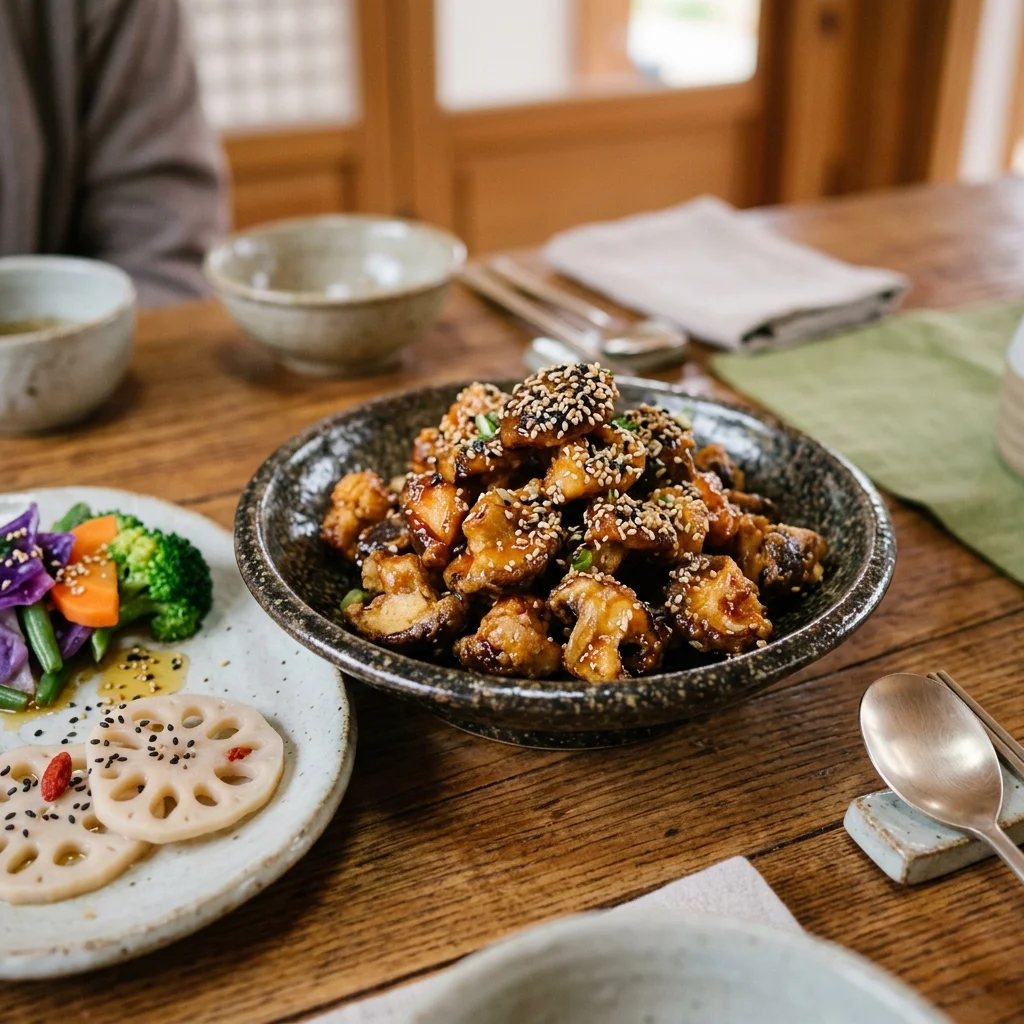
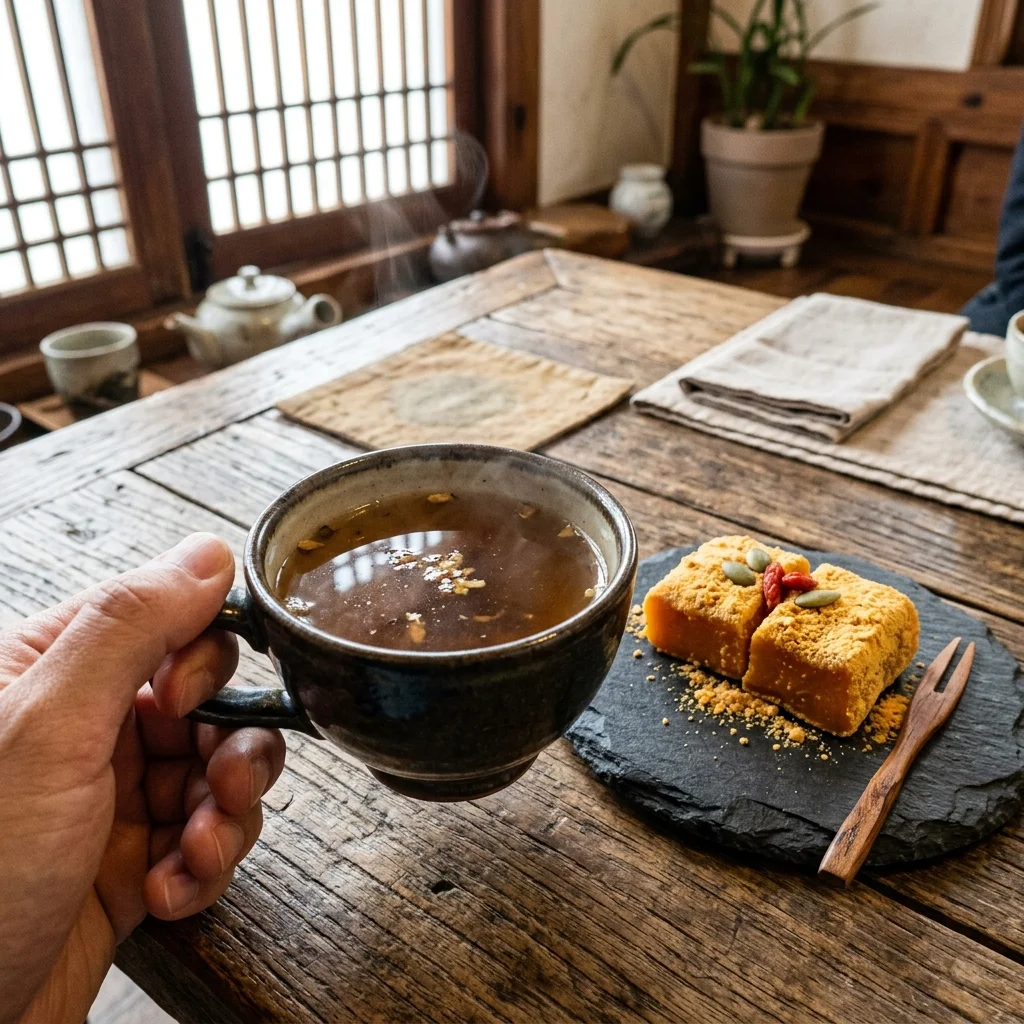
The experience typically lasts about ninety minutes. By the end, you don’t feel the typical “food coma” associated with large meals; instead, there is a lingering sense of clarity and physical lightness.
7. Common Questions & Insights (FAQ)
Q1: Is Korean temple food strictly vegan?
Yes. Traditional temple food is entirely plant-based. It excludes all meat, fish, poultry, eggs, and dairy. It is one of the oldest and most authentic forms of veganism in the world, though it is practiced for spiritual rather than dietary reasons.
Q2: If there is no garlic or onion, does the food taste bland?
Not at all. It simply tastes different. Without the overwhelming scent of garlic, you begin to notice the nuttiness of perilla oil, the sweetness of steamed carrots, and the complex, fermented depth of aged soy. It is a subtle sophistication that takes a moment to appreciate.
Q3: Is it a good option for children?
Absolutely. Because the flavors are mild and avoid the intense heat of chili peppers, children usually find it palatable. The only challenge is the atmosphere; these restaurants are often quiet zones, so it’s a great opportunity to teach children about mindful eating.
Q4: What should I wear when visiting these restaurants?
While there is no formal dress code, “smart casual” is the best approach. These spaces are designed for tranquility and respect, so avoiding overly loud or beach-style attire helps you blend into the serene environment.
Q5: Can temple food accommodate a gluten-free diet?
Many dishes are naturally gluten-free, as they rely on vegetables and rice. However, traditional soy sauce contains wheat. If you have a strict allergy, always notify the restaurant during booking so they can use a gluten-free alternative or a salt-based seasoning.
Ultimately, seeking out korean temple food seoul is about more than just a meal. It is a pause button in a fast-forward world. By stepping away from the noise and the spice, you rediscover a way of eating that nourishes the body and quiets the mind, leaving you with a memory that is as refreshing as the food itself.
TRAVEL WRITER
✓ Verified
Updated 2026.05