Navigating Korea: A Practical Guide to the T-Money Card (2026)
Reflecting the latest 2026 Seoul Metro fare adjustments and payment updates.
Landing in Seoul is a sensory explosion. Between the neon lights and the sheer scale of the transit system, the last thing any traveler wants is a stressful standoff at a subway turnstile. This is where the T-Money card becomes your most valuable asset. It isn’t just a ticket; it is a digital key that unlocks the entire Korean transport network, removing the friction of currency exchange and ticket machines from your daily commute.
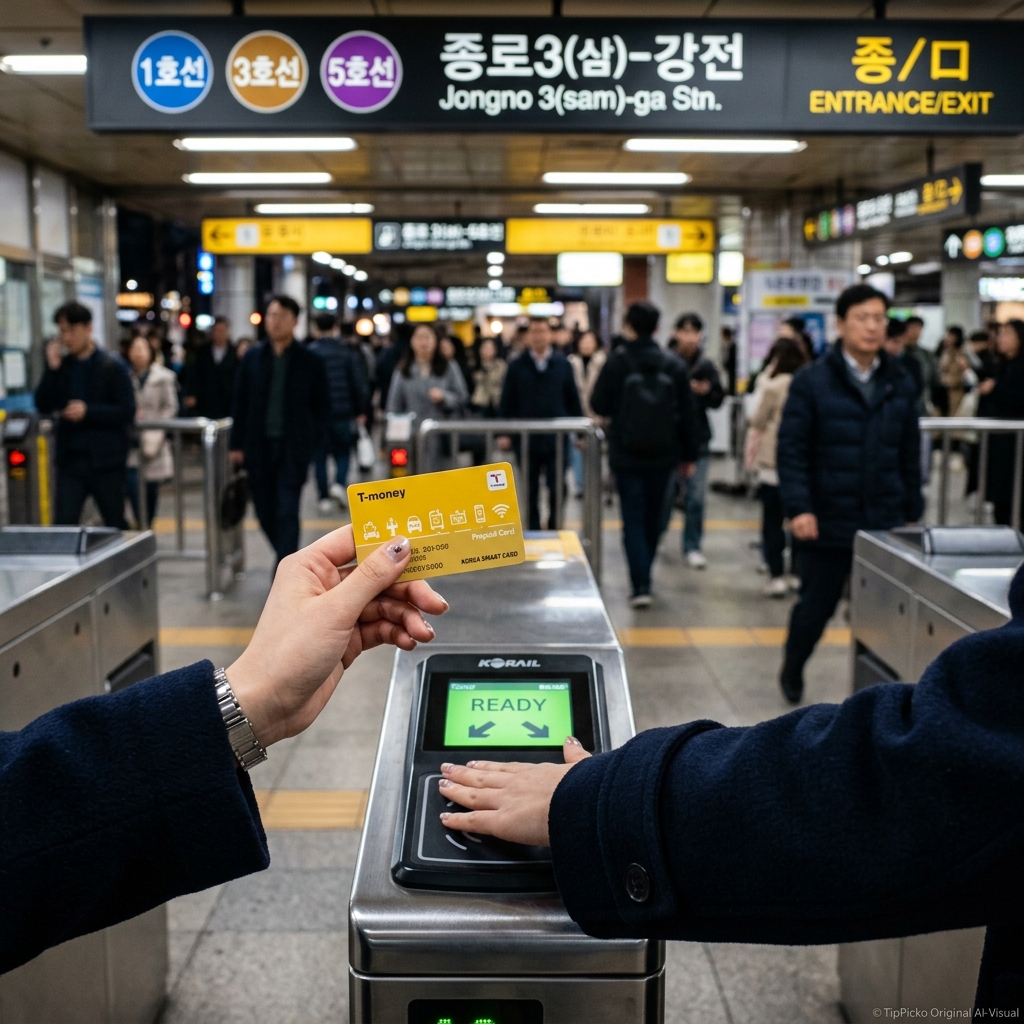
The T-Money card: An essential companion for any trip to South Korea.
Quick Navigation
- 1. The logic behind using T-Money
- 2. Procurement: Where to buy and current costs
- 3. The art of recharging: Cash, Cards, and Apple Pay
- 4. Mastering the integrated transfer system
- 5. Managing fares for children and teenagers
- 6. Decoding the card reader beeps
- 7. Essential transit phrases for non-speakers
- 8. When things go sideways: Troubleshooting
- 9. Cost Analysis: T-Money vs. Single-trip tickets
- 10. Selecting the right card for your needs
- 11. Expert answers to common questions
1. The logic behind using T-Money
You could survive with single-trip tickets, but you wouldn’t be traveling efficiently. The primary advantage of a T-Money card is its integration. Seoul’s transit network is designed as a single cohesive organism. When you use a T-Money card, you tap into the integrated transfer system, which means switching from a subway line to a city bus often costs nothing extra or only a nominal fee.
Single-use tickets are a logistical headache. They require a cash deposit that you must manually reclaim from a machine before leaving the station. For the modern traveler, this is an unnecessary waste of time. With T-Money, you move with the flow of the crowd. It transforms the act of commuting from a series of transactions into a seamless experience.
2. Procurement: Where to buy and current costs
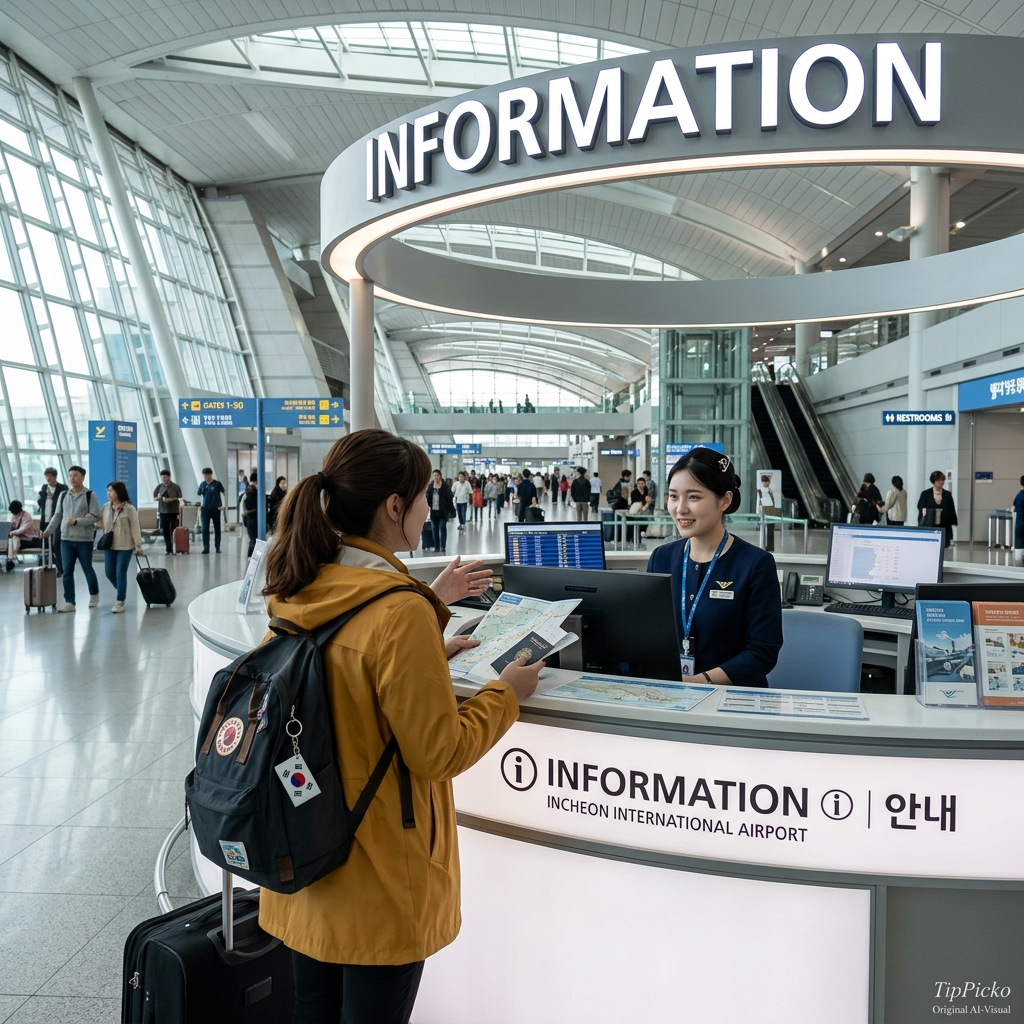
Immediate access at Incheon Airport kiosks
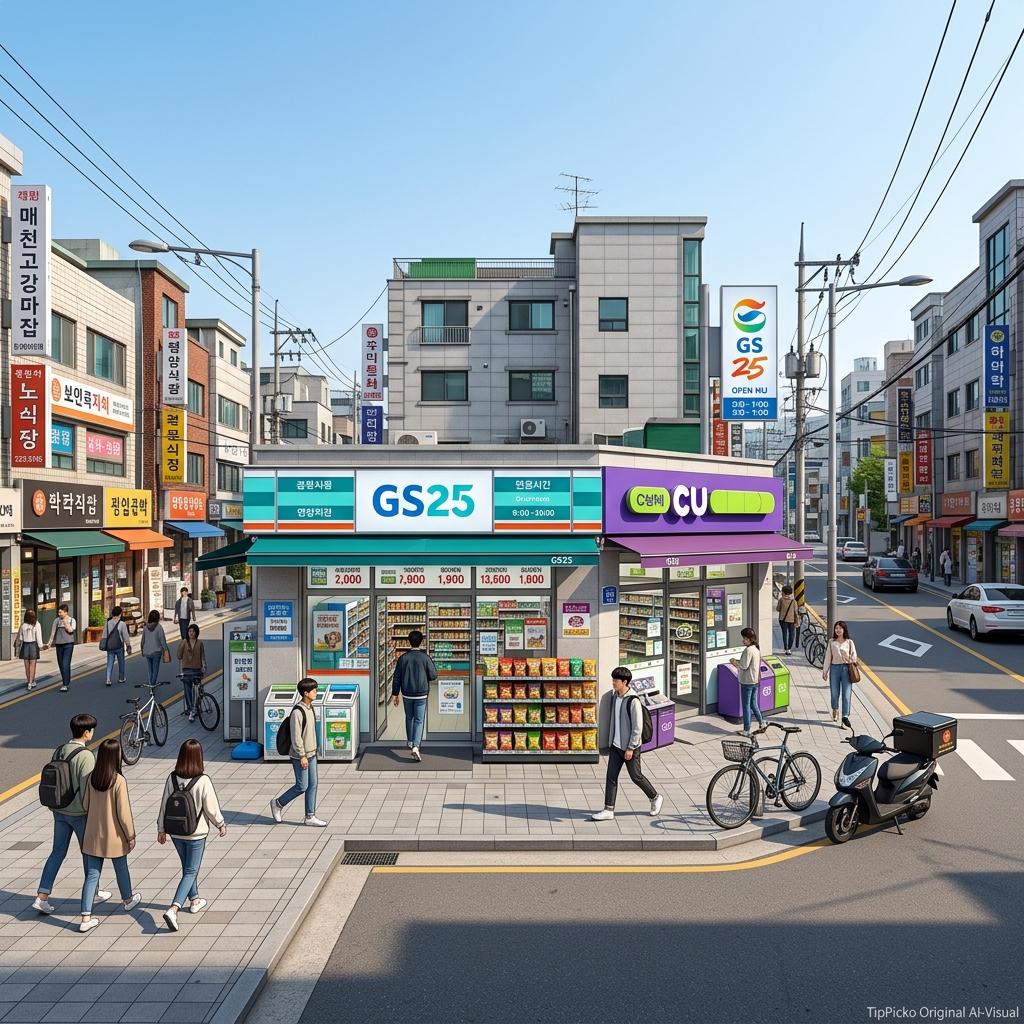
Available at 24/7 stores like CU and GS25
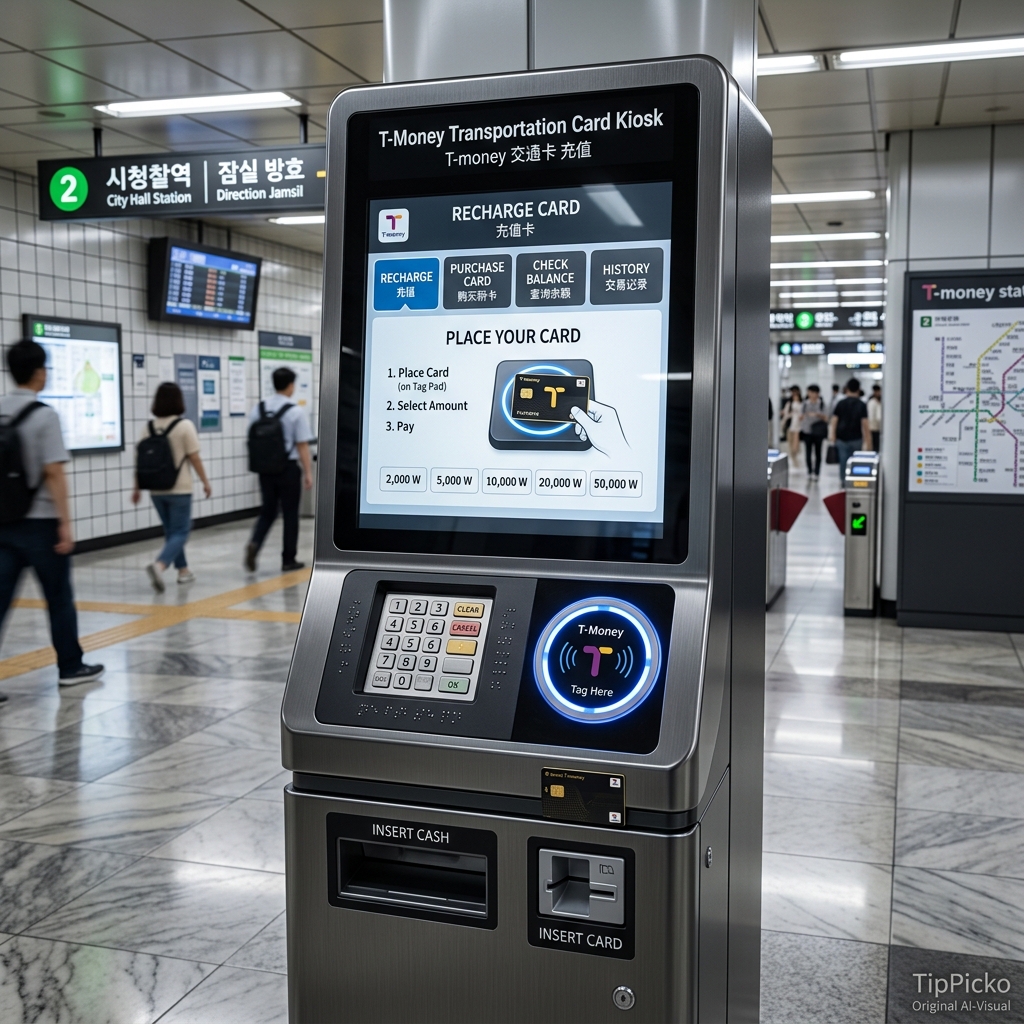
Subway station vending terminals
Acquiring a card is straightforward. Most basic cards cost between 2,500 and 4,000 KRW, depending on the design. You can pick one up the moment you land at Incheon International Airport via the convenience stores in the arrivals hall. Once you are in the city, any 24-hour convenience store (CU, GS25, 7-Eleven, or Emart24) will have them in stock. Official: VisitKorea
3. The art of recharging: Cash, Cards, and Apple Pay
Charging your card is where most travelers encounter a slight learning curve. While Korea is a digital society, T-Money recharging remains stubbornly tied to physical currency in many locations. Most subway stations have kiosks that now support international credit cards and Apple Pay, but this is not universal.
There is a distinction between paying for a recharge and tapping into a gate. You can use Apple Pay at a kiosk to add funds to your physical T-Money card. However, you cannot simply tap your iPhone or Apple Watch at the subway gate to enter. You still need the physical plastic card for the actual transit.
- The Minimum: You can add as little as 1,000 KRW, though we suggest starting with 10,000 to 20,000 KRW to avoid frequent stops.
- The Ceiling: Your card can hold up to 500,000 KRW. Check Limits
- The Cash Rule: If you are recharging at a neighborhood convenience store, cash is mandatory. These stores rarely accept foreign credit cards for T-Money top-ups. Always keep a few 1,000 and 5,000 KRW notes in your wallet.
4. Mastering the integrated transfer system
The “Magic” of Korean transit is the transfer discount. You can switch between the subway and the bus (or vice versa) up to four times without paying a full new fare. The condition is simple: you must tap off the vehicle or exit the station and tap into the next one within 30 minutes. It is a seamless process that significantly lowers the cost of exploring the city.
Night owls get a break. Between 9 PM and 7 AM, the transfer window expands to 60 minutes, recognizing that buses run less frequently during late hours. One critical warning: always tap off when exiting a bus. If you forget, the system cannot calculate your distance and will charge you a penalty fare on your next trip. Seoul Metro Official
5. Managing fares for children and teenagers
Standard cards default to adult fares. If you are traveling with children or teens, paying adult prices is a waste of money. Korea offers significant discounts for younger passengers, but these aren’t automatic. You must register the card’s user status.
Take the child’s passport to any convenience store. Ask the clerk for “Children (6-12) or Youth (13-18) discount registration.” The clerk will verify the age via the passport and update the card’s internal profile. This simple step can slash your daily transport budget by nearly 50% for your younger companions.
6. Decoding the card reader beeps
You don’t need to stare at the screen to know if your transaction worked. The card readers communicate through a series of distinct audio cues. Learning these saves you from that awkward moment of hesitation at the gate.
- A Single, Crisp Beep: Success. The payment was processed, and the gate is open.
- Two Rapid Beeps: Discount applied. This indicates the child or youth registration is active and a reduced fare was charged.
- A Prolonged Alarm or Multiple Beeps: Error. This usually means your balance is insufficient. Don’t panic; the screen will display exactly how much more you need to add to proceed.
7. Essential transit phrases for non-speakers
Transit Survival Kit
While many staff members in major stations speak basic English, these phrases will get you through a local convenience store or a smaller station office with ease.
- “Chung-jeon hae-ju-se-yo” (Please recharge this). Use this while handing over your card and cash.
- “Hwan-bul hae-ju-se-yo” (Please refund the balance). Use this when you’re preparing to leave the country.
- “Do-wa-ju-se-yo” (Please help me). A universal plea for assistance.
Pro tip: A polite nod and showing your card while saying these phrases is usually more than enough to be understood.
8. When things go sideways: Troubleshooting
Rapid Response Guide:
- The Lost Card: Unfortunately, T-Money cards act like cash. They are not linked to your identity, meaning they cannot be blocked or refunded if lost. Treat your card as carefully as a 50,000 KRW bill.
- Chip Malfunction: If the reader refuses to recognize your card despite a healthy balance, the chip may be damaged. Head to the Station Office (located near the main gates) for a quick diagnostic.
- Gate Gridlock: If you are stuck at the turnstile and can’t figure out why, look for the “Help” button on the side of the gate. A staff member will see you on camera and can remotely open the gate or guide you to a kiosk.
9. Cost Analysis: T-Money vs. Single-trip tickets
Many visitors wonder if the upfront cost of a T-Money card is worth it. We simulated a typical three-day Seoul itinerary—visiting Myeongdong, Gangnam, and Hongdae—to compare the expenses. The hidden cost of single-trip tickets is the 500 KRW deposit required for every single journey, which you must remember to reclaim.
Daily Savings Projection (2026)
| Itinerary | Rides/Day | Single Ticket Cost | T-Money Cost | Daily Saving | 5-Day Trip Saving |
|---|---|---|---|---|---|
| Airport → Hongdae → Myeongdong → Hongdae | 3 | 13,700 KRW | 11,250 KRW | 2,450 KRW | 12,250 KRW |
| Gangnam → Insadong → Itaewon → Gangnam | 4 | 5,600 KRW | 3,900 KRW (transfers) | 1,700 KRW | 8,500 KRW |
| Day-tripper: Seoul → Suwon → Seoul | 4 | 8,800 KRW | 7,200 KRW | 1,600 KRW | 8,000 KRW |
| Bus-heavy: Bukchon → Sinchon → Han River → Home | 5 | 7,500 KRW | 5,400 KRW (3 free transfers) | 2,100 KRW | 10,500 KRW |
* Projections based on 2026 base fares: 1,400 KRW (subway) / 1,500 KRW (bus). Calculations include the transfer discount and the 500 KRW single-ticket deposit overhead.
10. Selecting the right card for your needs
You may encounter other options, such as Cashbee or the allure of using a contactless foreign credit card. While some buses now accept contactless payments, T-Money remains the gold standard. It is the most universally accepted card and integrates perfectly with every single transfer point in the country.
| Feature | T-Money Card | Cashbee Card | Credit Card Tap (Visa/MC) | Korea Tour Pass |
|---|---|---|---|---|
| Where to Buy | Everywhere (CU, GS25, subway) | GS25 only | Already have it | Airport / Online |
| Accepted Nationwide | Yes (all cities) | Yes | Limited stations only | Seoul metro only |
| Transfer Discount | Yes (up to 4x) | Yes | No | Unlimited (flat fee) |
| Child/Youth Discount | Yes (register at store) | Yes | No | Separate card needed |
| Recharge Method | Cash, Intl. card, Apple Pay | Cash only | N/A | Pre-loaded |
| Taxi Payment | Yes | Yes | Yes | No |
| Convenience Store Use | Yes | Yes | Yes | No |
| Balance Refund | Yes (500 KRW fee) | Yes | N/A | No refund |
| Best For | All travelers (universal choice) | GS25 loyalists | Minimal transit users | Unlimited day-pass users |
The Verdict: For 95% of travelers in 2026, T-Money is the only card you need. Its reliability and universal acceptance outweigh the minor convenience of other niche options.
11. Expert answers to common questions
A: No. High-speed rail requires a reserved ticket. However, T-Money is perfectly valid for the AREX All-stop trains and city buses nationwide.
A: Yes. T-Money is a national standard. Whether you are taking a bus in Jeju or a subway in Busan, your card will work without any extra setup.
A: No. There is no expiration date. If you keep your card, you can use the remaining balance on your next trip to Korea, even years later.
A: On the subway, absolutely not. Each person must tap through the gate individually. On buses, you can tell the driver the number of passengers (e.g., “Two people”) and tap once, but this is less common for tourists. It’s better to have individual cards.
A: Look for the “Fare Adjustment Machines”. These are specifically located inside the paid area, usually near the exit gates. You can top up your card there to pay the remaining fare.
A: Yes. Almost every modern taxi in Korea accepts T-Money. It’s often the fastest way to pay, avoiding the need to wait for change.
A: Yes. T-Money functions as a prepaid debit card at most convenience stores and several chain cafes. It’s great for small purchases.
A: You can request a balance refund at most convenience stores. Note that they will charge a small service fee (usually 500 KRW). Alternatively, many travelers keep the card as a souvenir for their next visit.
Expand Your Journey
Now that you’ve mastered the transit system, ensure your digital connection is just as seamless. Explore our wider Korea Travel Guide for insider tips on connectivity, dining, and hidden gems in Seoul.
Official Resource Hub
Editor’s Pro Tip
If you are staying in Seoul for a month or more, look into the Climate Card (K-Pass). This is a newer, subscription-based model that allows for unlimited rides for a fixed monthly fee. For short-term tourists, however, the standard T-Money remains the most flexible and cost-effective choice.
TRAVEL WRITER
✓ Verified
Updated 2026.05